Is It Really Possible to Hire a Vetted Developer in 48 Hours — and How Does That Work?

Introduction
When tech founders hear "hire in 48 hours," they often roll their eyes. It sounds like a marketing gimmick — especially for senior developers. But at Wild.Codes, it's not just possible — it's standard. The secret lies in how we’ve reimagined the hiring process for modern, fast-moving teams.
In this article, we’ll break down exactly how startups and scaleups are onboarding vetted, senior developers in two days — without sacrificing quality, culture fit, or technical alignment.
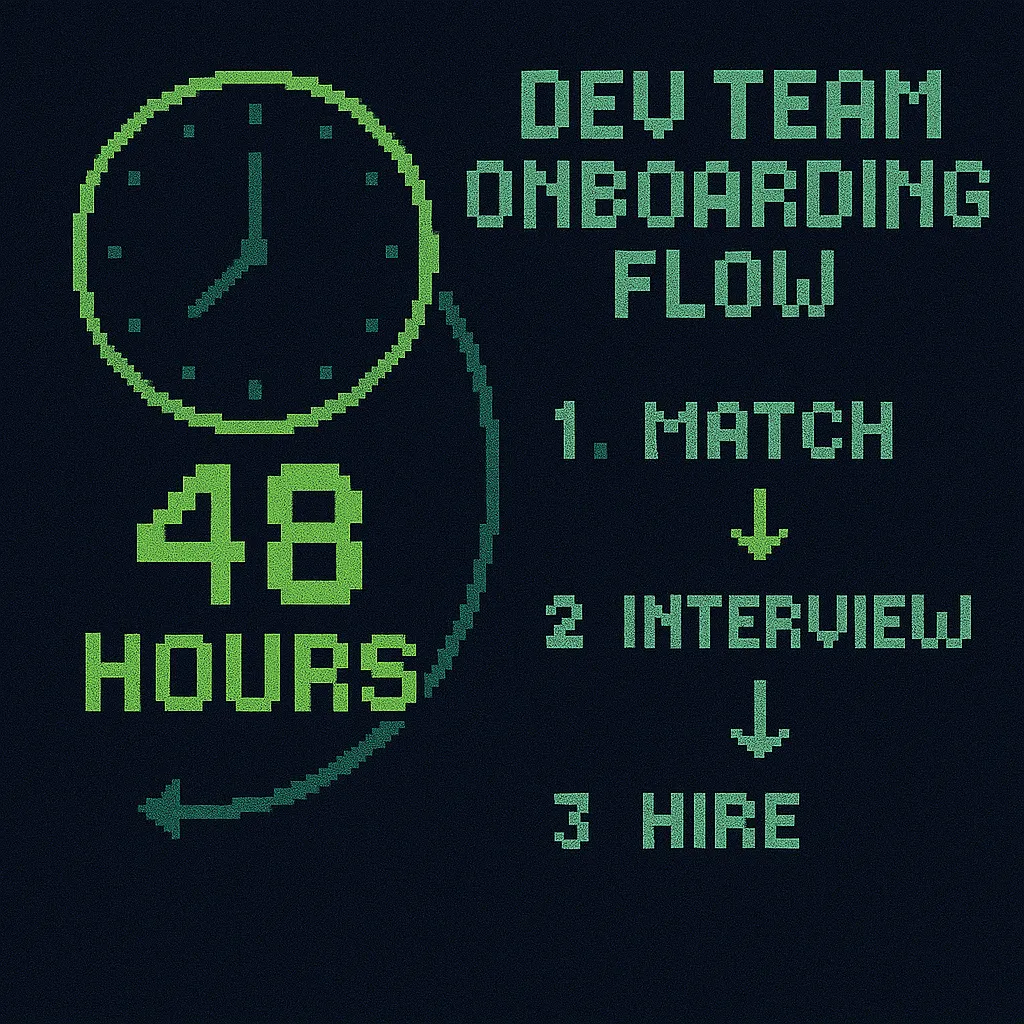
Why Traditional Hiring Takes Too Long
Let’s start with the status quo. A typical tech hiring cycle looks like this:
- Write the job description.
- Publish on job boards.
- Wait for applications.
- Filter CVs (most are irrelevant).
- Pre-screen interviews.
- Technical interviews.
- Team interviews.
- Reference checks.
- Offer & negotiation.
- Notice period.
That’s 4–8 weeks — if you’re lucky. And most of that time isn’t spent evaluating great candidates. It’s spent filtering noise.
Key stat: According to Workable, the average time to hire a developer is 41 days.
The Bottlenecks We Eliminated
At Wild.Codes, we looked at every friction point in traditional hiring and asked: “How do we remove this?”
❌ No More Job Descriptions
You fill out a short brief. We translate it into matching criteria instantly.
❌ No Waiting for Applications
We pull from a curated pool of 15,000+ pre-vetted developers — no posting or hoping.
❌ No Unqualified Interviews
Our AI filters out irrelevant candidates. Only high-signal matches reach your inbox.
❌ No Guesswork on Fit
Each candidate is pre-assessed for:
- Stack fluency
- Time zone overlap
- Culture alignment
- Communication skills
How the 48-Hour Process Actually Works
Day 1:
- You tell us what you need (tech stack, team context, timezone, product goals).
- AI + human experts filter and select top matches.
- You receive 1–3 developer profiles within hours.
Day 2:
- You meet your top match(es).
- We support onboarding logistics.
- You’re ready to start building.
It’s not a shortcut. It’s a better system.
Wild.Codes insight: We designed this to mirror how product teams actually work — fast, async, and with clarity of outcome.
What Makes 48-Hour Hiring Possible?
The speed isn’t magic — it’s infrastructure.
1. Always-On Vetting
We continuously vet developers year-round — not when a request comes in. Our pool is always fresh, always ready.
2. AI + Human Matching
Our AI ranks matches based on skills, location, and past delivery data. Then human experts validate each shortlist.
3. Developer Readiness
Our developers are not just "available" — they’re:
- Actively looking
- Technically assessed
- Onboard-ready
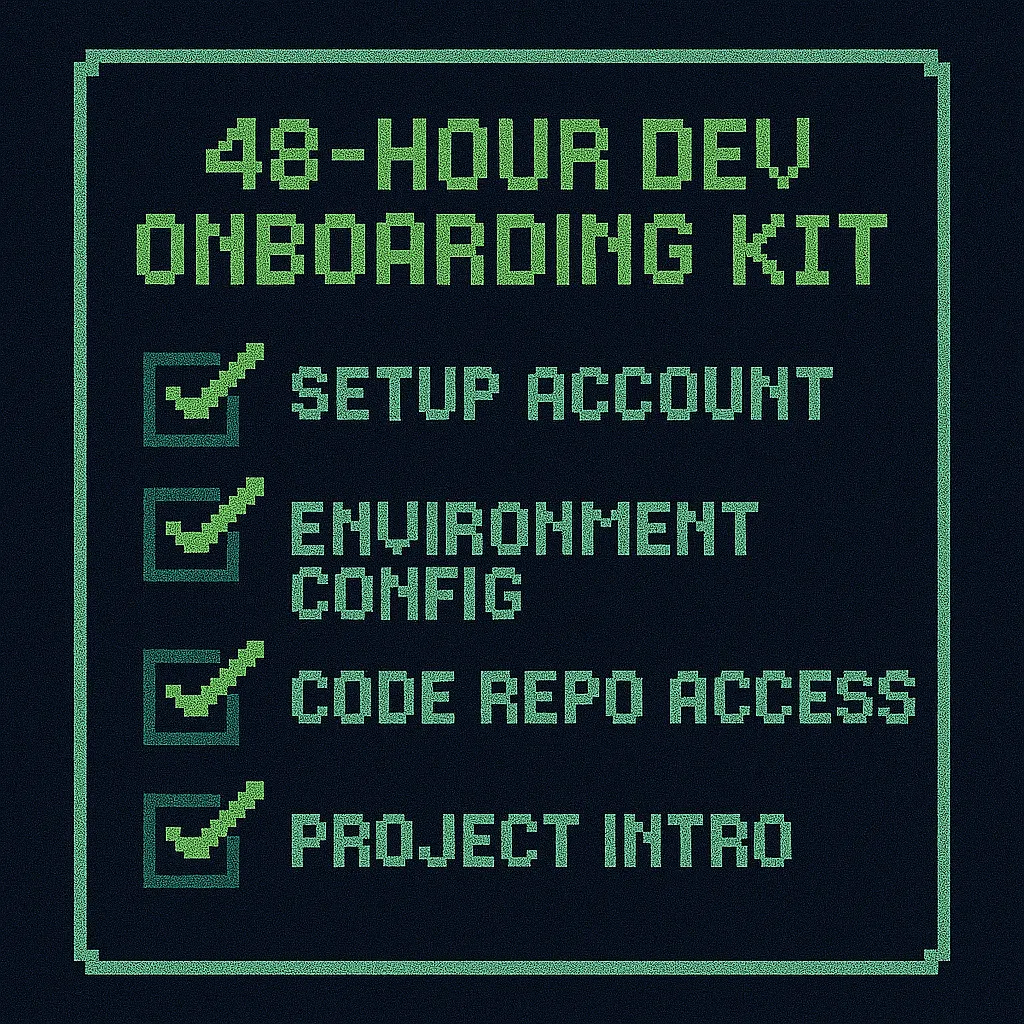
4. Embedded Onboarding Framework
We provide onboarding checklists, tool access templates, and communication norms so devs integrate on Day 1.
Quality vs. Speed: The Real Question
Many founders ask, “Sure, it’s fast — but is it good?”
Our answer: Speed and quality can co-exist when your process is:
- Data-driven
- Human-verified
- Outcome-focused
You don’t cut corners. You cut waste.
Case stat: One client hired 2 developers in 48 hours, launched their MVP in 3 weeks, and raised $1.2M six weeks later.
Case Study: 48 Hours to Velocity
A Series A startup came to us after spending 6 weeks trying to hire locally. Their product roadmap was blocked, and their lead developer was burning out.
Within 48 hours of briefing Wild.Codes, they:
- Interviewed 2 pre-vetted engineers
- Hired 1 senior React + Node developer
- Started onboarding the next day
Results:
- Time saved: 5+ weeks
- Delivery accelerated by 3 sprints
- Dev integrated into daily rituals within 48 hours of hire
They didn’t just hire fast — they shipped faster.
Hidden ROI of Hiring in 48 Hours
Faster hiring doesn’t just save time — it protects momentum. When teams stay in flow:
- Burnout decreases
- Roadmap stays on track
- Morale and motivation rise
You keep your team focused on what matters: shipping, scaling, and learning — not interviewing.

Final Thoughts
Hiring a vetted developer in 48 hours isn’t a myth — it’s a system. One built on:
- Always-ready, verified talent
- Smart AI-human matching
- Instant onboarding support
At Wild.Codes, we don’t help you "find" developers. We help you integrate the right one tomorrow.
TL;DR — Why 48-Hour Hiring Works:
- Traditional hiring is too slow for product-led teams
- Vetting doesn’t need to be reactive — it can be always-on
- Great developers are ready if your system is built to match fast
Your product needs momentum. We’ll deliver the team.
Meet your perfect-match developer →
Frequently Asked Questions
Can you really hire a vetted developer in 48 hours?
Yes — Wild.Codes' median time-to-shortlist is 47 hours. The speed is possible because vetting is done in advance: every developer in the pool has already passed technical assessment, English check, and reference verification before a client request arrives.
What has to be pre-vetted before a 48-hour match is possible?
Pre-vetting covers: technical skill (live coding or work sample), system design or architecture interview for senior roles, communication and async-collaboration fit, and reference verification. Pre-built developer profiles include stack, seniority, availability, timezone, and rate — so matching becomes a search problem, not a sourcing problem.
Does faster hiring reduce developer quality?
No, because the vetting work happened upstream. Slow hiring usually reflects slow sourcing and slow scheduling, not deeper assessment. Wild.Codes accepts under 5% of applicants — the same bar most “premium” platforms claim — but front-loads the work so clients see only finalists.
What information should a startup provide to get matched quickly?
Three things: tech stack and seniority needed, timezone overlap required, and a one-paragraph description of what the developer will work on in the first 30 days. Budget range helps narrow regional options. The more specific the brief, the faster the match.
What happens after receiving the first developer shortlist?
You interview the shortlisted developers (usually 2–3 candidates) the same week. Wild.Codes handles contracts, EOR setup, and payroll once you pick. Most clients have a developer onboarded and writing code within 7–10 days of first contact.

• PHP expertise;
• Database management skills;
•Jungling traits, methods, objects, and classes;
• Agile & Waterfall understanding and use;
• Soft skills (a good team player, high-level communication, excellent problem-solving background, and many more)
• OOP & MVS deep understanding;
• Knowledge of the mechanism of how to manage project frameworks;
• Understanding of the business logic the project meets;
• Cloud computing & APIs expertise.
• Reasonable life-work balance;
• The opportunity to implement the server-side logic via Laravel algorithms;
• Hassle-free interaction with back-end and front-end devs;
• Strong debugging profile.
• Using HTML, XHTML, SGML, and similar markup languages
• Improving the usability of the digital product
• Prototyping & collaboration with back-end JS experts
• Delivery of high-standard graphics and graphic-related solutions
• Using JS frameworks (AngularJS, VueJS, ReactJS, etc
• Clean coding delivery and timely debugging & troubleshooting solution delivery
• UI testing and collaboration with front-end JS teammates
• Database experience
• Building APIs while using REST or similar tech solutions
• Collaboration with project managers and other devs
• Delivery of design architecture solutions
• Creation of designs & databases
• Implementation of data protection and web cybersecurity strategies.
• Both front-end and back-end qualifications