Rewrite or Refactor? The Tech Leader’s No-Win Decision

The Temptation to Burn It All Down
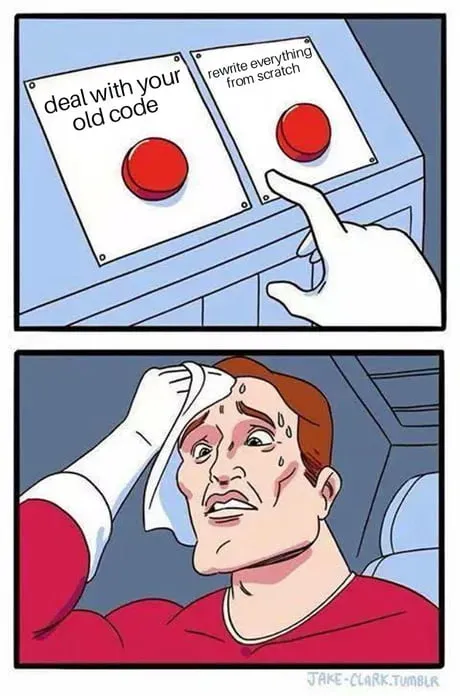
At some point, every technical leader stands at a crossroads: patch the old or start over. The product works — mostly. But features take longer. Bugs resurface. Devs grumble. Onboarding slows.
The idea creeps in: "Let’s just rewrite it."
Clean. Fresh. No tech debt. Everything rebuilt the right way.
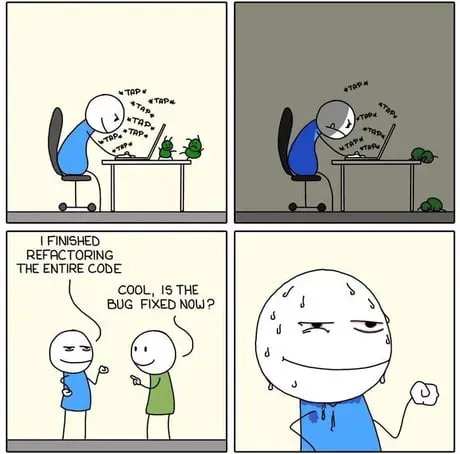
It sounds logical. But so does staying the course and refactoring carefully. Until you realize you’re just moving pieces around a brittle system that keeps fighting back.
This article is about that moment — and how experienced CTOs decide what to do next without burning the roadmap or the team.

Why This Decision Is So Hard
It’s not just technical. It’s emotional. A rewrite feels like liberation. A refactor feels like obligation. And leadership has to weigh not just code quality, but:
- Team morale
- Opportunity cost
- Product stability
- Hiring velocity
Most rewrites fail — not because the new code is bad, but because the old code had more embedded context than anyone realized.
Most refactors fail — not because they’re wrong, but because they try to modernize without a vision, leaving teams exhausted.
Frameworks for Choosing the Right Path
No choice here is perfect. But the right framework gives you confidence to move forward — and reduces regret later.
Here are four models tech leaders use to clarify direction:
The “What’s Actually Broken” Audit
Start with this:
- Are we blocked by architecture or just annoyed by it?
- Do users feel the problem, or only the engineers?
- Are we compensating with process or duct tape code?
If the pain is mostly internal and velocity is still predictable, a rewrite may be an overreaction.
The Risk of Rewrite vs. Risk of Inaction
Ask both:
- What happens if we rewrite and miss deadlines for 6–9 months?
- What happens if we don’t rewrite and keep losing developers and confidence?
Risk is always there. The better question is which risk you can manage and recover from.
The “Time Horizon” Model
How long do you need this system to last?
- <12 months: Don’t rewrite. Ship and iterate.
- 1–2 years: Consider aggressive refactors.
- 3+ years: Rewriting might be worth it — but only if paired with a smart migration plan.
The Team Energy Lens
Where’s the team leaning?
- Rewrites can rally or exhaust.
- Refactors can stabilize or demotivate.
Sometimes the best decision is the one the team will actually follow through on.
Hybrid Strategies and Smart Compromises
The best leaders rarely go all-in on one option. Instead, they carve a third path — one that balances risk, speed, and clarity.
Here’s how hybrid approaches play out in real teams:
Rebuild the Edge, Stabilize the Core
- Keep legacy systems running.
- Rewrite modular services around them.
- Use gateways or adapters to isolate complexity.
This gives teams quick wins and avoids full rewrites with no payoff.
Shadow Rewrite with Controlled Migration
- Build the new system alongside the old.
- Migrate piece by piece.
- Validate each step with real usage before scaling.
This is slower upfront — but safer long-term. Think “replaceable modules,” not “big bang.”
Refactor on the Critical Path Only
- Don’t refactor for purity.
- Target the parts you touch most — performance bottlenecks, frequently updated features.
This limits scope creep and focuses energy on impact.
Use New Projects to Replatform Gradually
Instead of reworking old flows, use new feature builds to introduce better architecture.
- New feature → built with clean standards.
- Legacy system → gradually surrounded by modern components.
Over time, the old system shrinks without halting product progress.
You’re Not Choosing Between Right and Wrong — You’re Managing Tradeoffs
The smartest decision is rarely the cleanest. It’s the one that accounts for your team’s reality, your product’s urgency, and your company’s risk tolerance.
Rewrites aren’t brave. Refactors aren’t cautious. Leadership is choosing the option your team can deliver on — without burning out or falling behind.

• PHP expertise;
• Database management skills;
•Jungling traits, methods, objects, and classes;
• Agile & Waterfall understanding and use;
• Soft skills (a good team player, high-level communication, excellent problem-solving background, and many more)
• OOP & MVS deep understanding;
• Knowledge of the mechanism of how to manage project frameworks;
• Understanding of the business logic the project meets;
• Cloud computing & APIs expertise.
• Reasonable life-work balance;
• The opportunity to implement the server-side logic via Laravel algorithms;
• Hassle-free interaction with back-end and front-end devs;
• Strong debugging profile.
• Using HTML, XHTML, SGML, and similar markup languages
• Improving the usability of the digital product
• Prototyping & collaboration with back-end JS experts
• Delivery of high-standard graphics and graphic-related solutions
• Using JS frameworks (AngularJS, VueJS, ReactJS, etc
• Clean coding delivery and timely debugging & troubleshooting solution delivery
• UI testing and collaboration with front-end JS teammates
• Database experience
• Building APIs while using REST or similar tech solutions
• Collaboration with project managers and other devs
• Delivery of design architecture solutions
• Creation of designs & databases
• Implementation of data protection and web cybersecurity strategies.
• Both front-end and back-end qualifications