






HERE’S WHY HIRING SLOWS YOU DOWN

Most candidates don’t fit. But you still have to review them. You waste hours filtering noise.
Hiring managers are waiting. Teams are blocked. And you’re expected to fix it fast.
The business needs engineers now. But the pipeline isn’t delivering. Pressure keeps building.
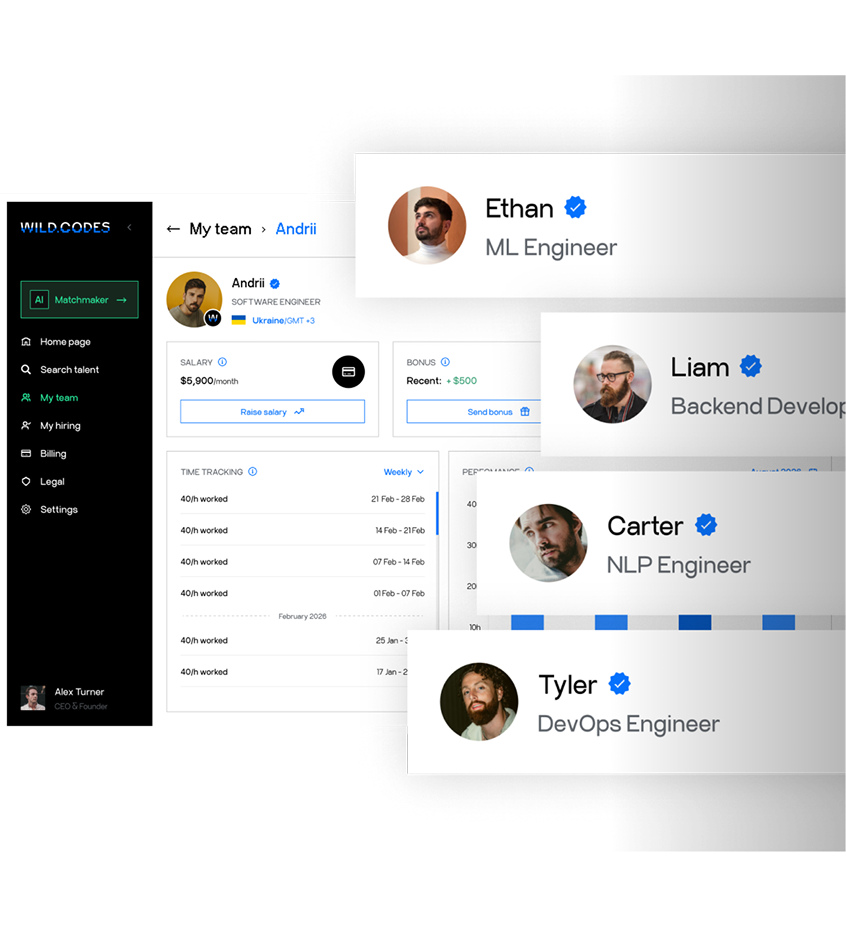
PRE-VETTED ENGINEERS, READY FOR REVIEW
You receive engineers who already passed technical vetting. Your team reviews only qualified candidates.

No weak pipeline
No unqualified candidates
No wasted screening time
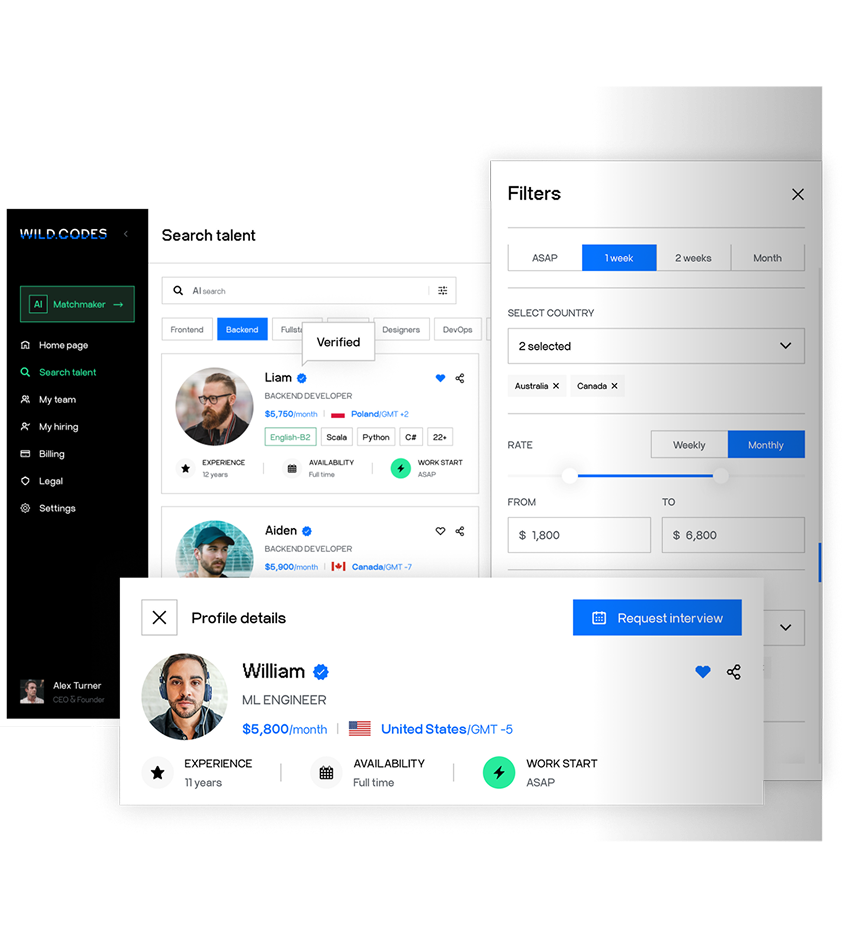
QUALIFIED CANDIDATES
IN 47 HOURS
Open a role and receive vetted engineers almost immediately. Keep your hiring pipeline active and predictable.
No empty pipeline
No sourcing delays
No slow hiring cycles
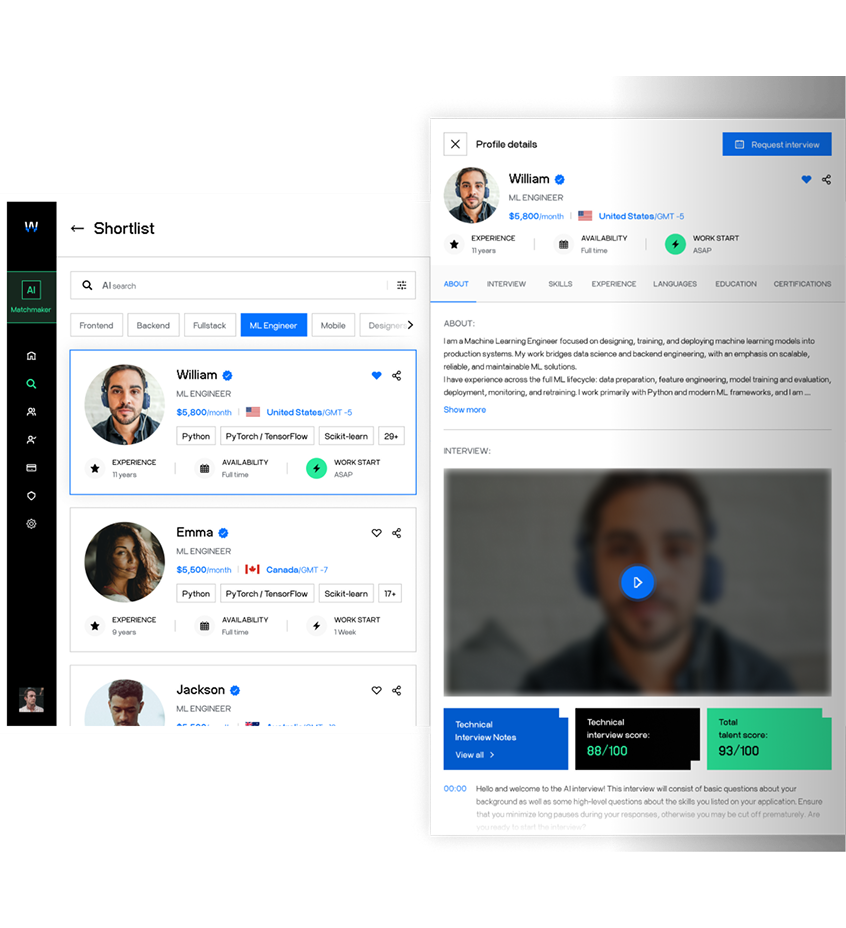
CONSISTENT FLOW OF QUALIFIED ENGINEERS
Maintain a reliable stream of engineers for current and future roles. No dependency on unpredictable sourcing channels.
No pipeline gaps
No hiring slowdowns
No reactive recruiting
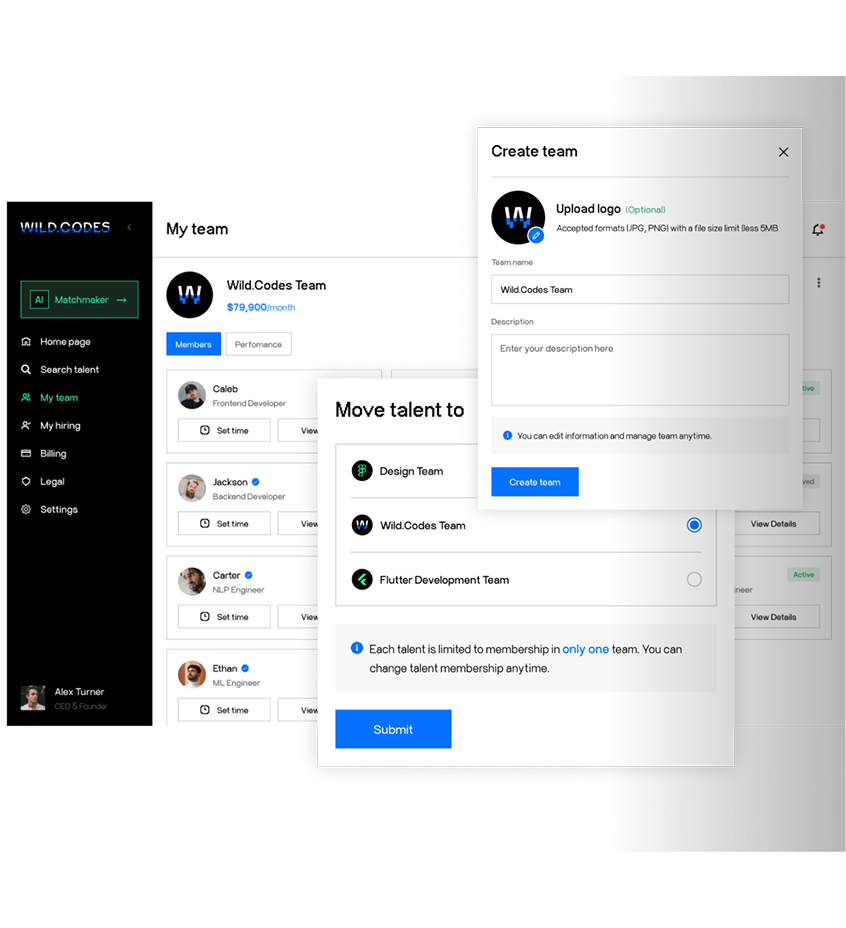
SCALE HIRING WITHOUT EXPANDING YOUR TEAM
Handle more open roles without increasing internal recruiting capacity. We extend your hiring infrastructure.
No recruiter overload
No hiring bottlenecks
No team capacity limits
Get Started in 3 Steps
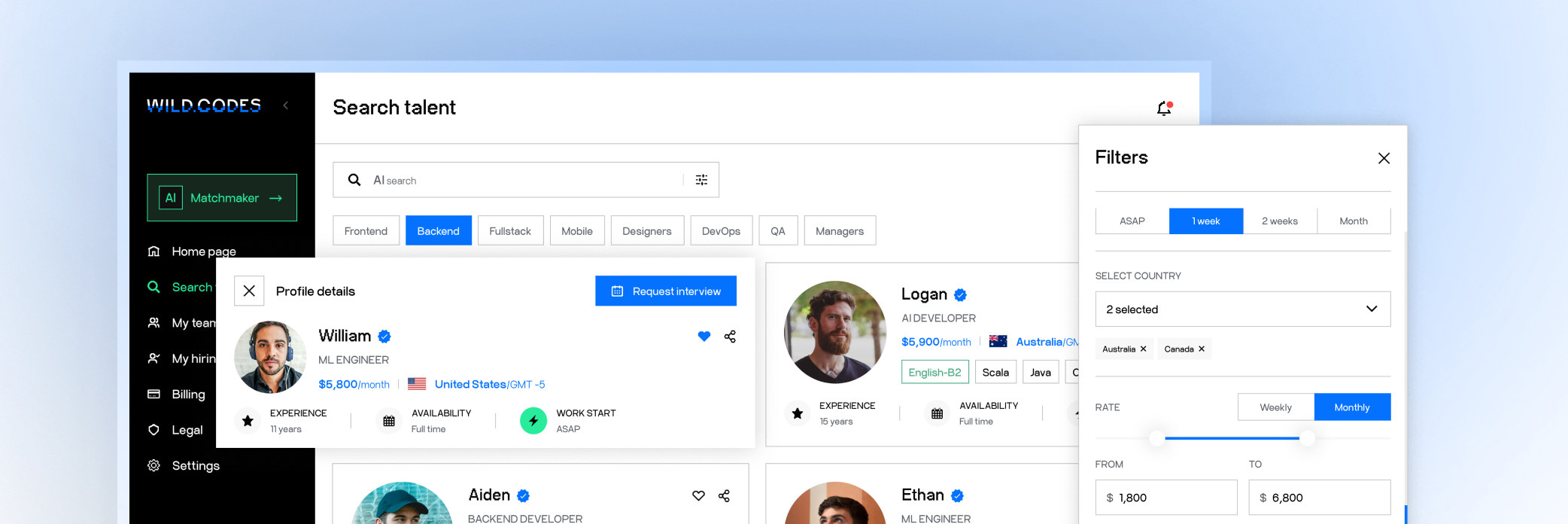

SHARE REQUIREMENTS
Tell us your stack and role.
We handle the rest.

REVIEW ENGINEERS
We send matching engineers.
You choose who fits best.

ENGINEERS JOIN
YOUR TEAM
Engineers integrate into your workflows.





CLIENT STORIES AND EXPERIENCES


Sometimes it’s very complicated for us to find highly skilled developers, but these guys did it perfectly.

Sometimes it’s very complicated for us to find highly skilled developers, but these guys did it perfectly.
Sometimes it’s very complicated for us to find highly skilled developers, but these guys did it perfectly.
Sometimes it’s very complicated for us to find highly skilled developers, but these guys did it perfectly.
STOP FIGHTING AN EMPTY PIPELINE

Discover more

Hire Developers
Looking to build a top-notch team? Hire skilled developers who can bring your ideas to life and drive your projects forward with expertise and innovation.

Hire Designers
Looking to build a top-notch team? Hire skilled developers who can bring your ideas to life and drive your projects forward with expertise and innovation.

Hire Marketers
Looking to build a top-notch team? Hire skilled developers who can bring your ideas to life and drive your projects forward with expertise and innovation.
FAQ
How Talent Leaders Keep Hiring Moving Without Breaking Their Pipeline
Talent leaders are expected to make hiring predictable while the inputs keep changing.
A new engineering role opens. Then two more. Priorities move. The hiring manager rewrites the brief. A strong candidate drops out. The pipeline still looks active, but the roles that matter are not getting closer to filled.
That is the gap between pipeline volume and pipeline health.
A healthy engineering pipeline is not the one with the most names in it. It is the one that gives you enough qualified people, at the right stage, for the roles the business needs now. You can see where signal is strong. You can see where it is weak. You know what your team can handle without sacrificing candidate quality or recruiter focus.
When that visibility disappears, the recruiting team becomes reactive. Every request feels urgent. Recruiters bounce between sourcing, intake calls, screening, scheduling, and status updates. Hiring managers see slow movement and ask for more candidates. More candidates create more review work. The pipeline grows while confidence falls.
The answer is not to push more volume through the same system. It is to protect the pipeline from low-signal work.
That starts with clear role requirements, stronger filters before hiring-manager review, and an honest view of recruiting capacity. It also means deciding which parts your team should own and which parts can be handled outside it. For recurring or urgent engineering needs, a remote developer hiring platform can add qualified supply without turning every new role into another sourcing project.
Wild.Codes is built for that operating gap. You define the stack, seniority, working context, and must-have signals. We match from a network of 15K+ vetted developers and send the first vetted candidates in 47 hours. Your team keeps control of the hiring decision without carrying every sourcing and early-screening step.
The goal is not hiring activity. The goal is a pipeline you can trust.
The Pipeline Looks Full — But Signal Is Low
A crowded pipeline can hide a weak one.
You may have hundreds of applications and still have nobody worth moving to a technical interview. You may have several candidates in process and still lack one credible option for the role with the highest business impact. You may be hitting top-of-funnel targets while hiring managers keep rejecting every profile.
That is not a volume problem. It is a signal problem.
More profiles create more work when the filter is weak
Every weak profile has a cost. A recruiter reviews it. A hiring manager comments on it. An engineer may join a screen. Someone records the rejection and restarts the search.
None of that moves the role forward.
The pattern gets worse across multiple open roles. Noise from one search consumes time needed for another. Recruiters start serving the loudest stakeholder instead of the most important role. Hiring managers lose confidence in the shortlist. Strong candidates wait while the team works through people who should never have entered the process.
If that feels familiar, the problem is usually upstream. The role may be too broad. The sourcing channel may be wrong. The initial screen may test credentials instead of evidence. The handoff between recruiting and engineering may be asking both teams to interpret a vague definition of “good.”
The practical fix is to define signal before sourcing starts.
For each role, agree on:
- the work the engineer must own;
- the technical depth the role actually requires;
- the evidence that proves that depth;
- the communication and collaboration context;
- the conditions that would make an otherwise strong candidate a bad fit.
Then screen against those signals before the profile reaches the hiring manager. A useful shortlist should reduce a decision, not create another research task. Our guide to reviewing developer evidence instead of empty CV language goes deeper into that distinction.
Track qualified movement, not pipeline decoration
Raw candidate count is easy to report and easy to misread. Better operating signals include:
- qualified candidates per priority role;
- conversion between each stage;
- time spent waiting at each handoff;
- reasons qualified candidates drop out;
- hiring-manager acceptance of submitted profiles;
- recruiter time spent on sourcing versus advancing candidates.
These measures show whether the pipeline is producing decisions. They also expose the difference between “busy” and “healthy.”
When signal improves, the visible pipeline may become smaller. That is not failure. Fewer candidates with a real chance of being hired are more useful than a large queue of maybes.
Hiring Pressure Increases Faster Than Hiring Capacity
Engineering demand does not arrive in a neat sequence.
A funding round creates several openings at once. A product deadline turns one role into an urgent role. Attrition adds an unplanned replacement. A new market changes the stack or timezone requirement. Suddenly the recruiting plan built for three searches is supporting eight.
The internal team cannot simply multiply.
Parallel roles create hidden coordination load
Each open role brings more than sourcing. It needs intake, calibration, outreach, screening, scheduling, candidate communication, feedback chasing, and reporting. Specialized engineering roles add another constraint: the people who can assess them are usually senior engineers with limited interview time.
As demand rises, the first failure is often not effort. It is attention.
Recruiters split focus across too many searches. Hiring managers receive inconsistent updates. Candidate follow-up slows. High-priority roles compete with easier roles for the same calendar. The team starts treating every delay as an isolated problem, even though the real bottleneck is shared capacity.
Adding another internal recruiter can be the right move when demand is permanent and broad. But it is a slow, fixed answer to a workload that may be uneven. The team still needs time to hire and ramp that recruiter. The hardest engineering searches still require specialist sourcing and technical screening.
The alternative is not to replace your recruiting function. It is to give it flexible capacity where the workload spikes.
That can mean using external sourcing for defined roles, bringing pre-vetted talent into the top of the funnel, or shifting technical filtering away from internal engineers. The point is to remove repetitive load while your team keeps ownership of prioritization, candidate experience, and the final decision.
If you are deciding when external support is cheaper than expanding internal headcount, use the team cost calculator as a starting point. The important comparison is not only fee versus salary. Include recruiter time, engineering interview time, delayed starts, and the cost of keeping several roles open at once.
Capacity should follow hiring demand
A stable recruiting model can stretch without becoming chaotic.
When hiring demand rises, you should be able to add sourcing and screening capacity without rebuilding the process. When priorities change, you should be able to redirect that capacity without carrying permanent overhead built for a temporary peak.
This is especially useful for talent leaders supporting several engineering teams. One team may need backend depth now. Another may open a data role next month. A third may pause hiring after a roadmap change. Flexible access to vetted talent gives you room to absorb those changes while keeping one operating standard across the pipeline.
Why Hiring Stability Matters More Than Hiring Speed
Speed matters. Uncontrolled speed does not.
A rushed pipeline can move the wrong people faster. A slow pipeline can lose the right people before the team decides. Talent leaders need something harder than either extreme: stable movement.
Hiring stability means you know what happens when a role opens. The intake is clear. The screening criteria are consistent. The right stakeholders are available. Qualified candidates move without avoidable pauses. If one source underperforms, the entire search does not collapse.
Predictability protects quality
When the pipeline is unstable, standards drift under pressure. A hard role stays open, so the team relaxes a requirement without discussing the tradeoff. An overloaded hiring manager delays feedback, then rushes the next decision. Recruiters expand the search, which adds more noise and more review.
A stable process makes those tradeoffs visible. It lets you separate urgency from evidence.
The fastest shortlist is not useful if the candidates are wrong. The most rigorous interview loop is not useful if strong candidates wait through unnecessary delays. The operating standard should be simple: remove waiting and weak signal, not judgment.
That is why sourcing and vetting need to work as one system. If you want the detailed mechanics, see the guide to sourcing and vetting remote engineers. For a talent leader, the key is ownership: decide which signals are verified before your team sees a candidate and which signals remain part of your internal interview.
Stable hiring earns stakeholder trust
Hiring leaders are constantly translating uncertainty for the business. A predictable pipeline makes those conversations sharper.
Instead of saying, “We have a lot of candidates,” you can say, “We have two qualified profiles ready for review, one role needs a tighter brief, and this search requires extra sourcing capacity.”
That changes workforce planning. Engineering leaders can make more realistic roadmap decisions. Finance can see where external support offsets fixed hiring overhead. Recruiters can focus on candidate movement instead of defending top-of-funnel volume.
Stability is what turns hiring from a sequence of emergencies into an operating system.
What Changes When Pipeline Becomes Predictable
Predictability does not mean every role closes on the same date. It means the team can see risk early and respond before a search stalls.
The difference shows up across the function.
Recruiters spend less time filtering obvious mismatches. Hiring managers review fewer, stronger profiles. Engineers join fewer low-value screens. Candidate communication gets faster because ownership is clear. Multiple roles can move in parallel without every new request resetting the process.
Your team manages decisions, not noise
A predictable pipeline changes the work itself.
You stop asking, “How many people are in the funnel?” and start asking:
- Do we have enough qualified signal for the roles that matter most?
- Where is the next decision blocked?
- Which work requires internal judgment?
- Which work can be handled before it reaches the team?
- Can this hiring model absorb the next two roles without adding permanent overhead?
Those questions are more useful because they connect recruiting activity to business capacity.
Wild.Codes supports that model with a narrow job: bring vetted engineering signal into your pipeline quickly. You keep the role definition and hiring decision. We handle sourcing, technical vetting, and matching. The first vetted candidates arrive in 47 hours, drawn from a network of 15K+ developers.
That does not replace your ATS, your hiring standards, or your candidate experience. It removes the low-signal work that makes those systems harder to run.
The pipeline stays useful when demand changes
A predictable pipeline gives you options.
You can support an urgent role without abandoning the rest of the hiring plan. You can run several engineering searches without asking one recruiter to become a specialist in every stack. You can increase capacity for a hiring peak, then reduce it when the roadmap changes.
Most importantly, you can tell the business what is real.
Not how many applications arrived. Not how many messages were sent. How much qualified engineering capacity is available, what decision comes next, and what could slow it down.
That is the standard talent leaders need: less noise, clearer movement, and a hiring pipeline that keeps working when the company asks for more.
If your engineering hiring plan is outrunning your team’s sourcing and screening capacity, bring in a vetted pipeline instead of another pile of profiles. Keep control of the decision. Remove the work that does not need to be yours. Book a call to see how Wild.Codes can support the roles already straining your pipeline.
Table of Contents