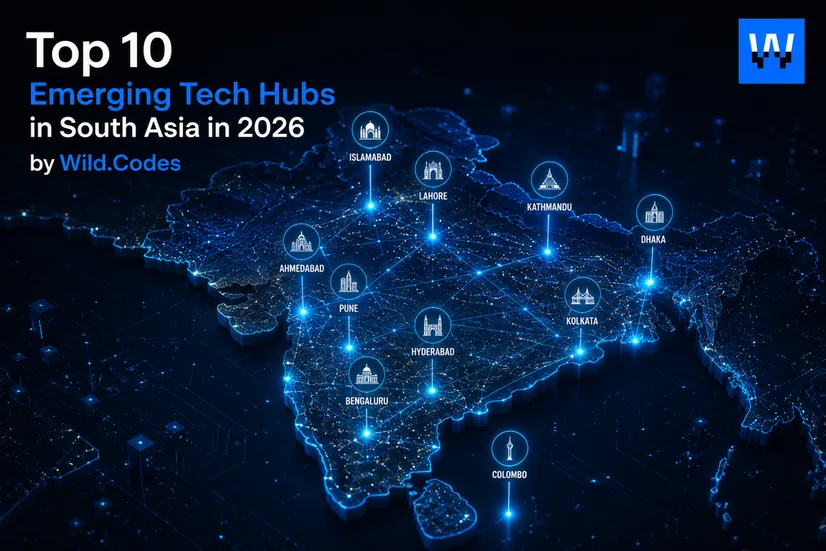
Top 10 Emerging Tech Hubs in South Asia in 2026 by Wild.Codes

Top 10 Emerging Tech Hubs in South Asia in 2026 by Wild.Codes
Meta description: South Asia's tech sector keeps expanding fast in 2026 — from India's AI-driven IT giants to Uzbekistan's IT Park boom. Here's Wild.Codes' updated ranking of the top 10 emerging tech hubs in the wider region, with the numbers behind each one.
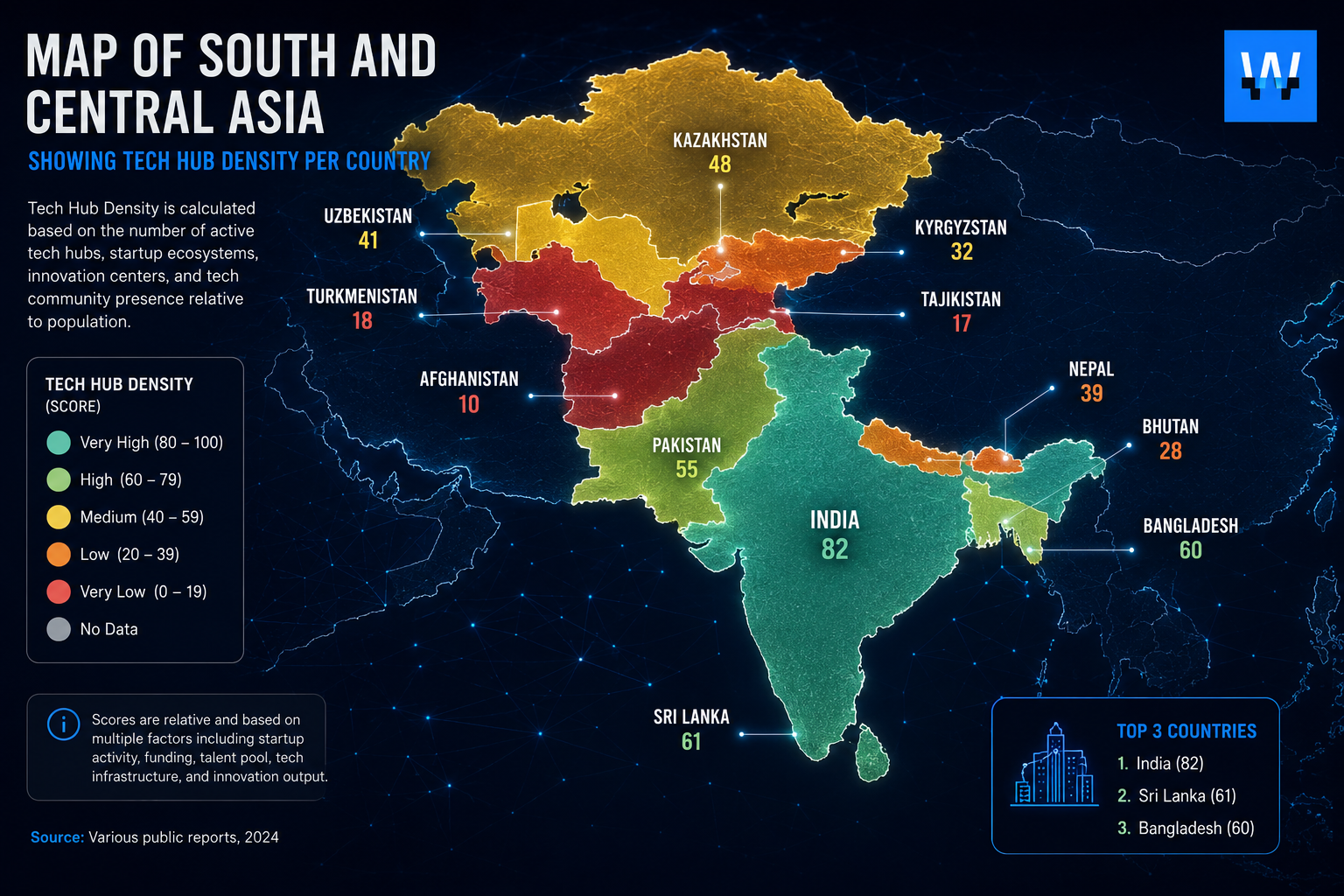
Most experts use the term Asia Pacific for the wider southern territory, but it's more useful to split it into South Asian and Southeast Asian markets. Both groups have shown steady progress in economics, education, and digitalization over the past several years — and the list of emerging tech hubs tied to South Asia keeps growing in 2026.
India remains the clear leader among startups, coworking spaces, IT education centers, and developer conferences. Four other countries have built real momentum as core South Asian tech hubs: Bangladesh, Sri Lanka, Pakistan, and Nepal. And in 2026, a second tier is becoming impossible to ignore — Bhutan, the Maldives, Afghanistan, Myanmar, and Uzbekistan are each building a distinct digital niche, whether that's policy-driven digital infrastructure, fintech specialization, or remote-first freelance labor.
The IT sector keeps making the economies across this region more competitive. Digital public infrastructure, ICT exports, and freelance income have all grown meaningfully since 2024 — and in several of these markets, growth actually accelerated through 2025 and into 2026 rather than leveling off.
Here's what stands out about these tech hubs going into 2026:
- India's developer base keeps expanding faster than any other country's. GitHub's Octoverse 2025 report found India added roughly 6.2 million new developer accounts in a single year and projects India will overtake the US in total developer accounts by 2027.
- Sri Lanka's ICT exports hit $177.83 million in January 2026 alone — a 60% jump year-over-year — with the sector now employing over 175,000 professionals.
- Pakistan's IT exports crossed $4 billion in 2026, with freelancers alone contributing over $1 billion in export earnings for the first time in the country's history, growing roughly 80% year-over-year.
- Bangladesh's ICT export base has grown to roughly $1.9 billion, with over 4,500 registered software and IT companies now operating out of Dhaka and nearby hubs.
- Uzbekistan's state-backed IT Park posted $191.8 million in service exports in Q1 2026 alone, up nearly 25% year-over-year, as Tashkent chases a $5 billion export target by 2030.
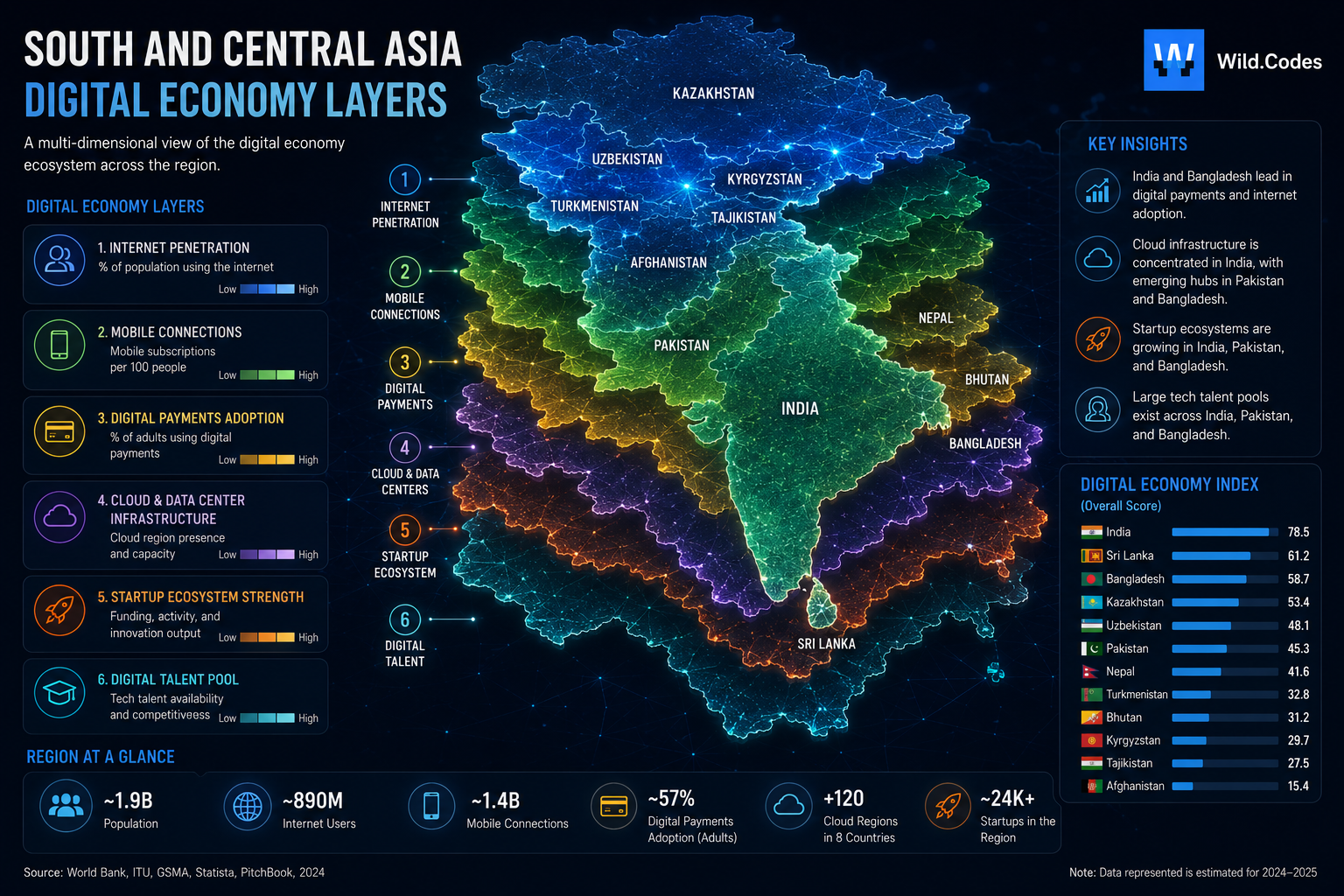
This region still isn't matching the pace of the Baltic tech hubs or Latin America's emerging hubs. But developers here combine affordable rates with strong motivation to work with reputable international companies — which is exactly why this region keeps showing up on hiring shortlists. Here's the updated list for 2026, expanded from 5 to 10 hubs to reflect how much broader the region's digital footprint has become.
1. India

No list of South Asian tech hubs works without India. The country's developer base is growing faster than anywhere else in the world right now: GitHub's Octoverse 2025 report shows India adding about 6.2 million new developer accounts in 2025 alone, putting it on track to overtake the US in total developer accounts by 2027 — a pace of roughly 28% year-over-year growth, nearly double the US rate.
The most popular language among Indian engineers remains Python, with JavaScript, Java, and TypeScript rounding out the top skills employers ask for. The country's core IT hub cities are unchanged from a few years ago, but each has deepened its specialization:
- Bengaluru — the country's AI and product-engineering center, home to most global capability centers.
- Delhi-NCR — enterprise IT services and government-adjacent tech.
- Hyderabad — cloud, life sciences tech, and a growing AI research base.
- Pune — fintech and manufacturing-adjacent software.
Global tech conferences keep concentrating here — Bengaluru alone hosts a large share of India's specialized tech events, including DevOps- and Python-focused gatherings drawing developers from across the south of the country. Amazon, Meta, Google, and Microsoft all run major engineering centers in Indian cities, and the country's homegrown IT services giants remain massive employers in their own right, even as headcount growth has flattened industry-wide as AI-driven delivery models reduce reliance on pure headcount expansion.
Worth noting for 2026: headcount at India's largest IT services firms has actually been shrinking or flat quarter over quarter, even as revenue and deal pipelines stay healthy — a sign that AI and platform-based delivery are decoupling growth from pure hiring volume. That's a meaningful shift from the "add more engineers to grow" model that defined Indian IT outsourcing for two decades, and it's worth factoring in if you're building a hiring strategy that assumes India will keep scaling purely on headcount.
India's top IT employers by headcount (2026):
| IT Company | Employees (2026) |
|---|---|
| Tata Consultancy Services (TCS) | ~582,000–593,000 |
| Infosys | ~337,000 |
| Wipro | ~233,000 |
| HCL Technologies | ~227,000 |
| Tech Mahindra | ~149,000 |
2. Bangladesh

Bangladesh's IT sector has kept growing steadily, with the country's ICT export base now estimated at roughly $1.9 billion and growing around 13.5% year-over-year. The main hubs remain Dhaka, Chattogram, and the country's Hi-Tech Parks, with over 4,500 registered software and IT companies now operating in the country.
Export-oriented firms like Brain Station 23 (700–850+ employees) have become genuine "destination employers" for graduates from BUET, Dhaka University, and BRAC University, running multiple project teams across telecom, fintech, healthcare, and enterprise clients in Europe, North America, and the Middle East. The broader ecosystem now spans everything from enterprise ERP vendors to AI-native studios, and industry rankings for 2026 highlight names like Vivasoft, Pridesys IT, and Kaz Software alongside Brain Station 23.
Bangladesh's programmers remain concentrated in Python, Java, and JavaScript/React stacks, and the country continues attracting outsourcing relationships with global brands, including Deloitte, Amazon, and IBM, which maintain a presence tied to Bangladeshi delivery teams.
3. Sri Lanka
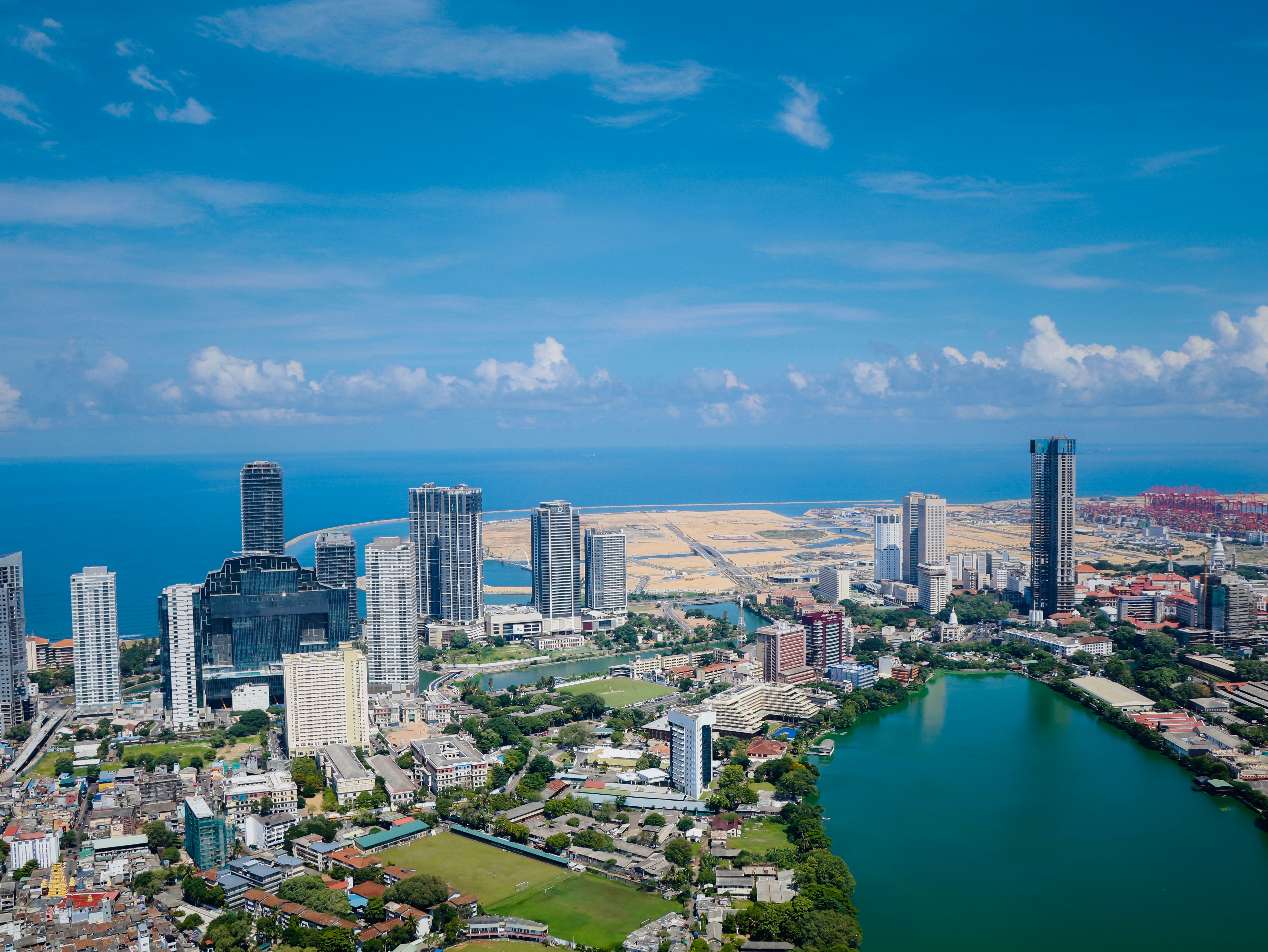
Sri Lanka's IT sector has had a genuinely strong run into 2026. According to the Export Development Board, software companies generated $177.83 million in export earnings in January 2026 alone — a 60.21% jump over January 2025 — with February following at $153.62 million, up 36.66% year-over-year. The sector now employs over 175,000 skilled professionals and has become one of the country's top five export earners.
The market has settled into three clear tiers: enterprise firms like WSO2, Virtusa, and LSEG Technology; mid-market specialists like Calcey Technologies and Rootcode; and a growing wave of agile, AI-native boutique studios. Most activity is still centered on Colombo, though Kandy, Jaffna, and Matara are showing up more often as secondary hubs.
Sri Lankan engineers remain strong in HTML, JavaScript, Angular, React, and .NET, and English proficiency continues to be a real differentiator for the country versus regional competitors. Hourly rates for outsourced Sri Lankan development typically run $20–$60, positioning the country as a genuinely competitive mid-tier option in the region.
4. Pakistan
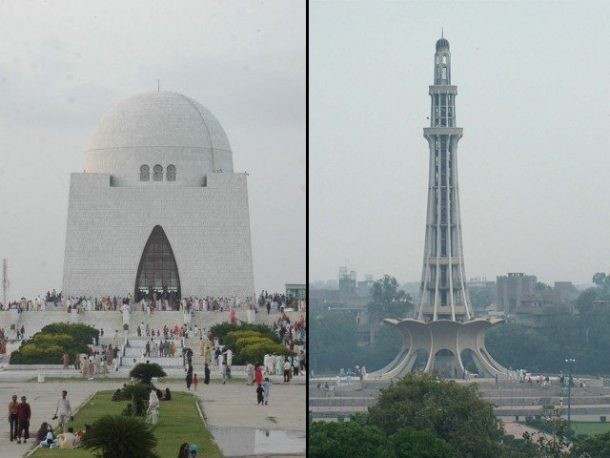
Pakistan has had one of the strongest growth stories in the region this year. According to the Pakistan Software Export Board (PSEB), the country's IT exports surpassed $3.2 billion in FY2024–25 and had already reached roughly $4–4.5 billion by mid-2026, with the government targeting $10 billion by 2030. Over 300,000 English-speaking IT professionals and more than 20,700 registered IT and ITeS companies now operate domestically.
What's genuinely new for 2026 is the freelance surge. State Bank of Pakistan data shows freelancers earned $1.6 billion in export remittances in the first eleven months of FY2026 alone — growing roughly 80% year-over-year — and now account for about a quarter of the country's total IT exports. Pakistan's freelance workforce has grown to an estimated 3 million people, with a large share in their twenties and thirties, working from Karachi, Lahore, Islamabad, and increasingly from smaller cities like Faisalabad, Multan, and Sargodha.
The main hiring hubs remain Lahore's software houses, Karachi's fintech corridors, and Islamabad's startup ecosystem. If your team needs fast, flexible capacity for smaller-scope work, Pakistan's freelance market has genuinely matured into a serious sourcing channel — not just a low-cost fallback.
5. Nepal
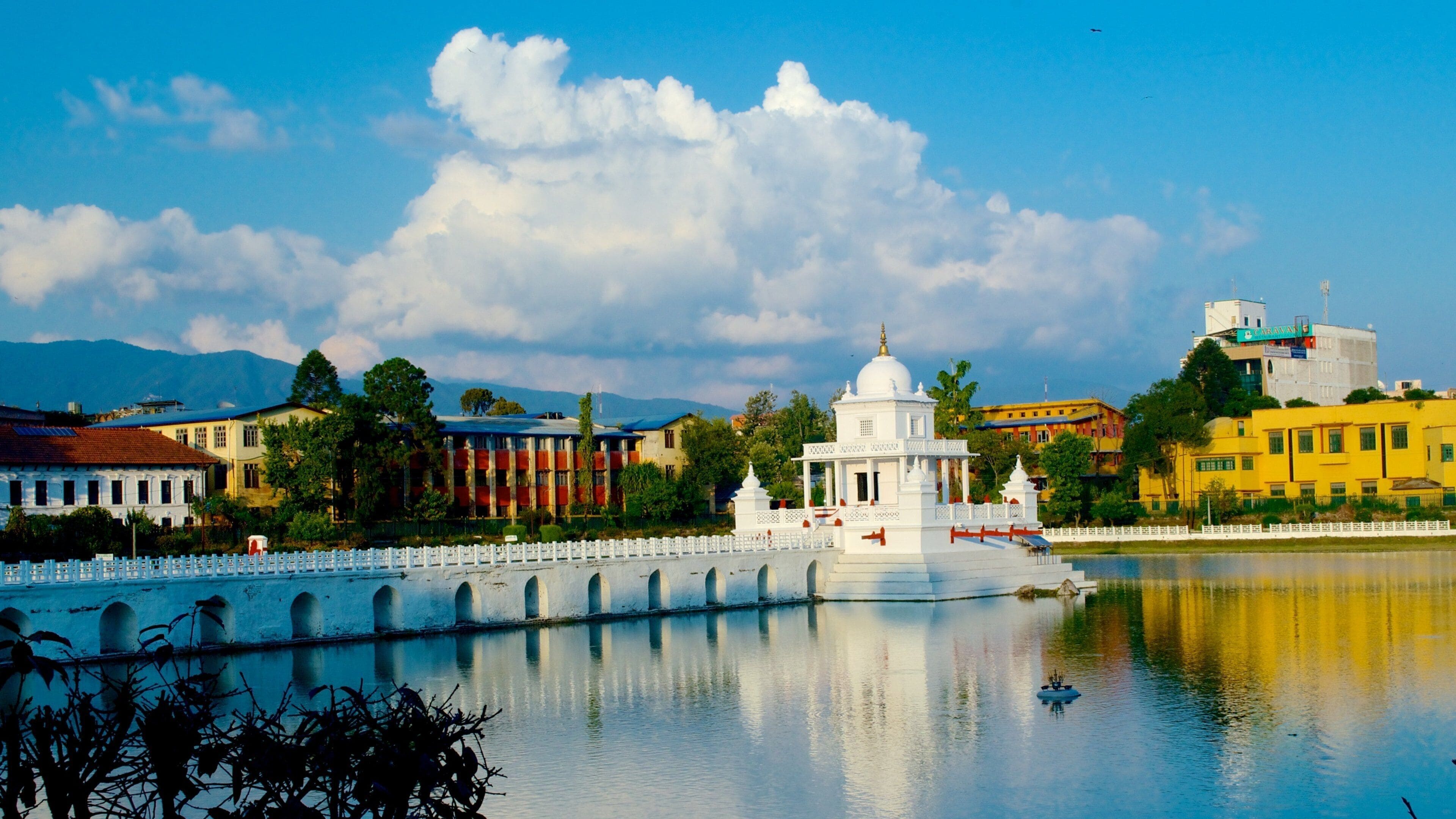
Nepal's tech sector has moved well past pure IT outsourcing. Leapfrog Technology, CloudFactory, F1Soft International, and Cotiviti Nepal have put the country on the map in AI, health tech, fintech, and data annotation specifically — not just generic staff augmentation. F1Soft, in particular, pioneered Nepal's digital payments infrastructure (eSewa) and now builds fintech solutions used across South Asia.
Most engineering talent remains concentrated in Kathmandu, though a meaningful share of teams now work fully distributed. Python, JavaScript (React/Node.js), Java, C#, and SQL remain the dominant stacks, with Python plus TensorFlow or PyTorch increasingly requested for AI-focused roles. Industry estimates put junior developer salaries in the NPR 25,000–45,000/month range, with fintech and cybersecurity roles commanding a premium.
Nepal is smaller than India's ecosystem by any measure, but it's catching up specifically in AI and data analytics — areas where a handful of well-regarded local firms are doing genuinely global-standard work rather than commodity outsourcing.
6. Bhutan (Thimphu)
Bhutan is often overlooked in South Asia tech discussions, yet in 2026 it stands out as a policy-driven digital economy experiment rather than a volume IT market. The country has deliberately positioned technology as a tool for sustainable growth, public-sector efficiency, and long-term human capital development. Thimphu, as the capital, concentrates most of Bhutan's ICT activity, government digital programs, and early-stage software initiatives — reinforced in June 2026 when Bhutan formally joined the global "50-in-5" campaign to advance interoperable digital public infrastructure.
Bhutan's tech ecosystem is small but structured. The focus isn't mass outsourcing, but digital public infrastructure, cloud-based services, and IT systems supporting governance, education, and sustainability. For CTOs, Bhutan is interesting not as a hiring powerhouse, but as an emerging digital-first state model, where software, cloud platforms, and data systems are built with long-term national objectives in mind. Bhutan's fintech sector remains genuinely tiny — fewer than 10 active players, concentrated in payments and digital banking — but it's growing under direct central bank sponsorship rather than a startup-driven model.
| Indicator | Data |
|---|---|
| Primary tech focus | E-government, cloud services, ICT platforms |
| Ecosystem maturity | Early-stage, policy-driven |
| Talent profile | Junior–mid engineers, digital services |
| CTO relevance | GovTech, digital infrastructure, pilot projects |
7. Maldives (Malé)
The Maldives doesn't compete with large South Asian tech hubs on developer volume, but it plays a unique role as a high-income, digital-services-oriented economy. In 2026, Malé is emerging as a niche technology center driven by tourism tech, e-commerce platforms, fintech services, and cloud-based digital operations supporting a globally connected economy. The country has the highest GDP per capita in South Asia at over $16,000, and the government is backing that up with real capital — most notably the $8.8 billion Maldives International Financial Centre project in Malé, aimed at attracting fintech and digital-asset firms and projected to create up to 16,000 jobs by completion.
What makes the Maldives relevant for CTOs isn't scale, but specialization and digital adoption. Engineering teams here are typically small, remote-first, and integrated into international delivery models, with a genuine push toward using digital finance to diversify the economy beyond tourism.
| Indicator | Data |
|---|---|
| Primary tech focus | Tourism tech, fintech, cloud platforms |
| Ecosystem maturity | Early but fast-adopting |
| Talent profile | Remote-first engineers, digital services |
| CTO relevance | Niche platforms, distributed teams |
8. Afghanistan (Kabul & Herat)
Despite extreme geopolitical constraints, Afghanistan remains part of South Asia's remote digital labor reality. Cities like Kabul, Herat, Mazar-i-Sharif, and Kandahar host training centers, software development meetups, and a growing community of freelancers connecting to global platforms. In 2026, the Afghan tech footprint is almost entirely remote-export-driven, with engineers contributing to web, mobile, QA, and data projects for foreign clients — junior developer salaries typically start around $300/month, rising to roughly $2,260/month for senior roles.
From a CTO perspective, Afghanistan isn't a traditional "hub" — it's an edge-case talent source. The relevance lies in understanding how global tech ecosystems increasingly absorb talent independently of local infrastructure, through remote work, open-source contribution, and platform-based contracting, driven largely by a young, education-hungry population with few local alternatives.
| Indicator | Data |
|---|---|
| Primary tech focus | Remote web & mobile development |
| Ecosystem maturity | Fragmented, informal |
| Talent profile | Freelancers, remote engineers |
| CTO relevance | Long-tail remote talent markets |
9. Myanmar (Yangon)
Although Myanmar is typically classified as Southeast Asia, Yangon increasingly appears in South Asia-linked tech flows, particularly through outsourcing routes connected to India and Bangladesh. In 2026, Yangon represents a latent digital market where fintech platforms, mobile-first products, and outsourcing services continue developing despite significant infrastructure challenges — engineers routinely factor in generator costs and mobile-data reliability as part of daily work life. Fintech is the sector's clear engine: platforms like Wave Money and KBZPay have evolved from apps into national financial infrastructure, driving real demand for backend developers, data analysts, and fraud-detection/ML engineers.
For CTOs, Myanmar isn't about short-term scaling — it's about watching early signals in an underpenetrated digital economy that may integrate further into South Asian tech supply chains over time, particularly given its strategic position between China, Southeast Asia, and India.
| Indicator | Data |
|---|---|
| Primary tech focus | Fintech, digital services, outsourcing |
| Ecosystem maturity | Early / constrained |
| Talent profile | Junior–mid engineers |
| CTO relevance | Long-term diversification watchlist |
10. Uzbekistan (Tashkent)
Uzbekistan is increasingly connected to South Asian tech ecosystems through talent migration, outsourcing, and remote engineering delivery. Tashkent has positioned itself as a Central Asian digital hub with strong government backing, competitive engineering costs, and rapidly improving IT education — and the momentum is real: the state-backed IT Park now hosts 650+ resident companies exempt from taxes, posted $191.8 million in service exports in Q1 2026 alone (up nearly 25% year-over-year), and is targeting $5 billion in IT exports by 2030. The sixth International PLUS-Forum Digital Uzbekistan, held in Tashkent in May 2026, drew over 2,600 participants from 38 countries.
For CTOs operating in or near South Asia, Uzbekistan functions as a strategic adjacent market — culturally distinct, but increasingly integrated into Eurasian tech delivery models. Local universities now graduate more than 29,000 IT professionals annually, and global players like ZTE have opened regional service centers directly inside IT Park Tashkent, a signal of how seriously international companies are starting to take the market.
| Indicator | Data |
|---|---|
| Primary tech focus | Software exports, IT services |
| Ecosystem maturity | Emerging / structured |
| Talent profile | Product & outsourcing engineers |
| CTO relevance | Regional diversification, near-shore teams |
Why this expansion makes sense in 2026
By 2026, South Asia's tech story is no longer limited to its five largest markets. The region is evolving into a layered ecosystem:
- Core countries with massive scale — India, Bangladesh, Sri Lanka, Pakistan, Nepal.
- Smaller economies using digital policy as leverage — Bhutan and the Maldives, where government-backed digital infrastructure and finance projects punch well above the countries' population size.
- Adjacent regions feeding talent and services into South Asian tech flows — Afghanistan's remote-freelance workforce, Myanmar's fintech-driven demand, and Uzbekistan's state-sponsored IT Park.
For CTOs, founders, and engineering leaders, these additional hubs matter not because they replace India or Bangladesh, but because they extend optionality, reduce concentration risk, and reveal where the next generation of distributed engineering capacity may emerge.
FAQ
Which South Asian country has the most software developers in 2026?
India, by a wide margin. It's also the fastest-growing developer market in the world right now, adding millions of new developer accounts annually and on track to overtake the US in total developer accounts by 2027.
Is Pakistan a good option for freelance hiring in 2026?
Yes — Pakistan's freelance IT sector has genuinely matured, with freelancers earning over $1.6 billion in export remittances in FY2026 and a workforce of roughly 3 million people. It's a solid channel for smaller-scope, flexible work.
What makes Sri Lanka different from India as a hiring destination?
Scale and specialization. Sri Lanka's IT sector is far smaller than India's, but strong English proficiency, competitive $20–$60/hour rates, and a mature enterprise/mid-market/boutique tier structure make it a reliable mid-size option.
Are Bhutan, the Maldives, Afghanistan, Myanmar, and Uzbekistan realistic hiring markets?
Not in the same way as the core five. These are early-stage or niche markets — useful for specific cases (GovTech pilots, remote freelance capacity, near-shore diversification) rather than as a primary sourcing hub.
Summarizing
If you're interested in hiring skillful programmers from South Asia — whether that's a senior engineer in Bengaluru or a specialized fintech developer out of Kathmandu — Wild.Codes can help you find your match. Our AI-vetted, expert-verified network covers developers, designers, and project managers from across the region, with affordable hourly rates and zero recruitment costs.

• PHP expertise;
• Database management skills;
•Jungling traits, methods, objects, and classes;
• Agile & Waterfall understanding and use;
• Soft skills (a good team player, high-level communication, excellent problem-solving background, and many more)
• OOP & MVS deep understanding;
• Knowledge of the mechanism of how to manage project frameworks;
• Understanding of the business logic the project meets;
• Cloud computing & APIs expertise.
• Reasonable life-work balance;
• The opportunity to implement the server-side logic via Laravel algorithms;
• Hassle-free interaction with back-end and front-end devs;
• Strong debugging profile.
• Using HTML, XHTML, SGML, and similar markup languages
• Improving the usability of the digital product
• Prototyping & collaboration with back-end JS experts
• Delivery of high-standard graphics and graphic-related solutions
• Using JS frameworks (AngularJS, VueJS, ReactJS, etc
• Clean coding delivery and timely debugging & troubleshooting solution delivery
• UI testing and collaboration with front-end JS teammates
• Database experience
• Building APIs while using REST or similar tech solutions
• Collaboration with project managers and other devs
• Delivery of design architecture solutions
• Creation of designs & databases
• Implementation of data protection and web cybersecurity strategies.
• Both front-end and back-end qualifications