






HERE’S WHY HIRING SLOWS YOU DOWN

Most candidates look good on paper. But once they join, they slow your team. You waste hours reviewing profiles and interviews, and still don’t find someone you trust.

Features are planned. Deadlines are set. But without the right engineers, nothing moves. Your team gets overloaded. Everything starts slowing down.

Recruiters send weak candidates. Internal hiring moves too slow. By the time you find someone, you’ve already lost momentum.
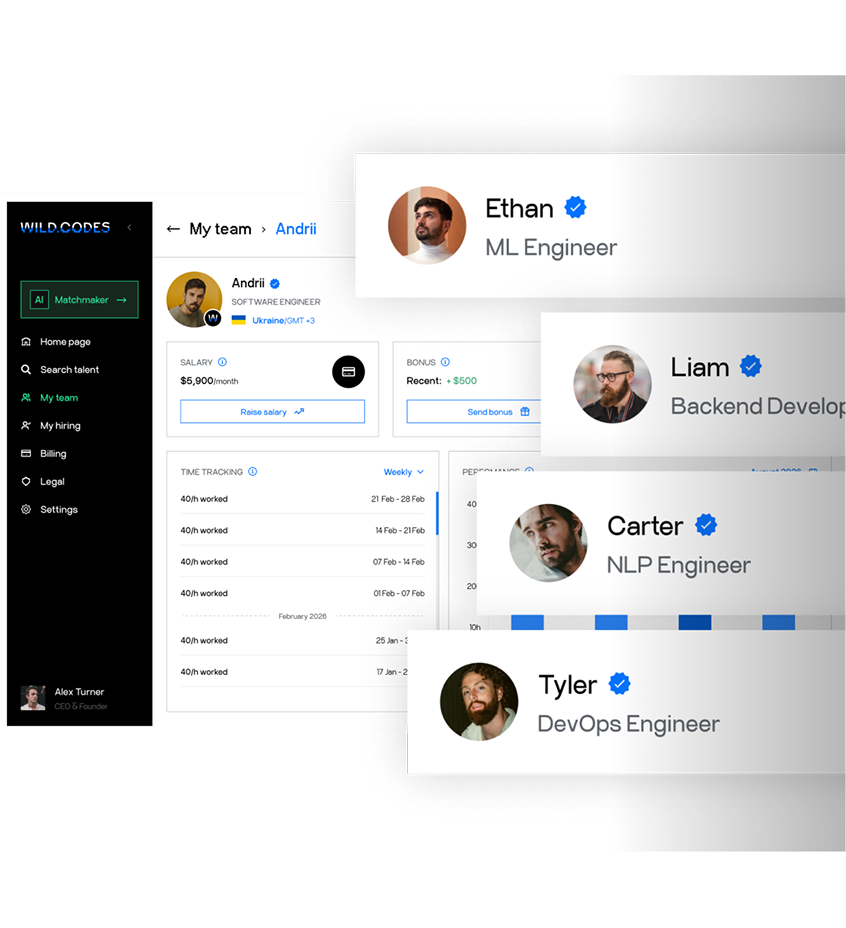
PRE-VETTED ENGINEERS ONLY
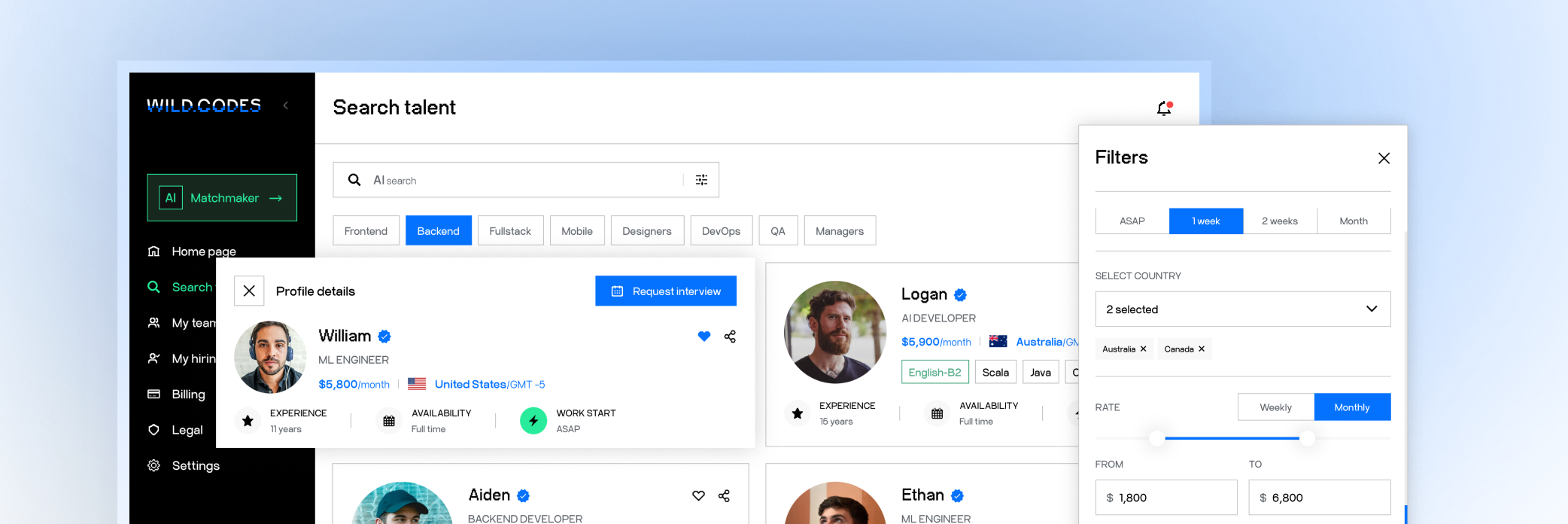
We filter thousands of engineers before you see them. You only review candidates who passed real technical vetting.

No CV spam
No unqualified candidates
No screening burden on your team
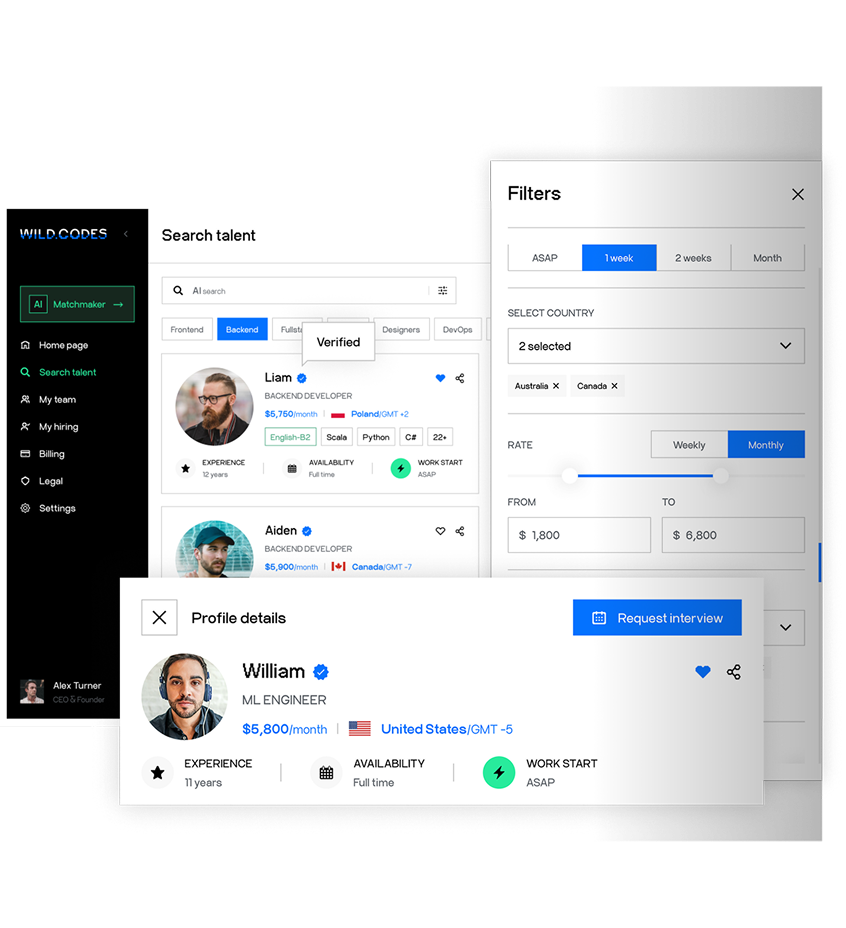
YOUR NEXT ENGINEER
IN 47 HOURS
Skip sourcing, outreach, and early screening. We deliver engineers ready for your stack and requirements.
No hiring bottlenecks
No sourcing delays
No roadmap blocked by hiring
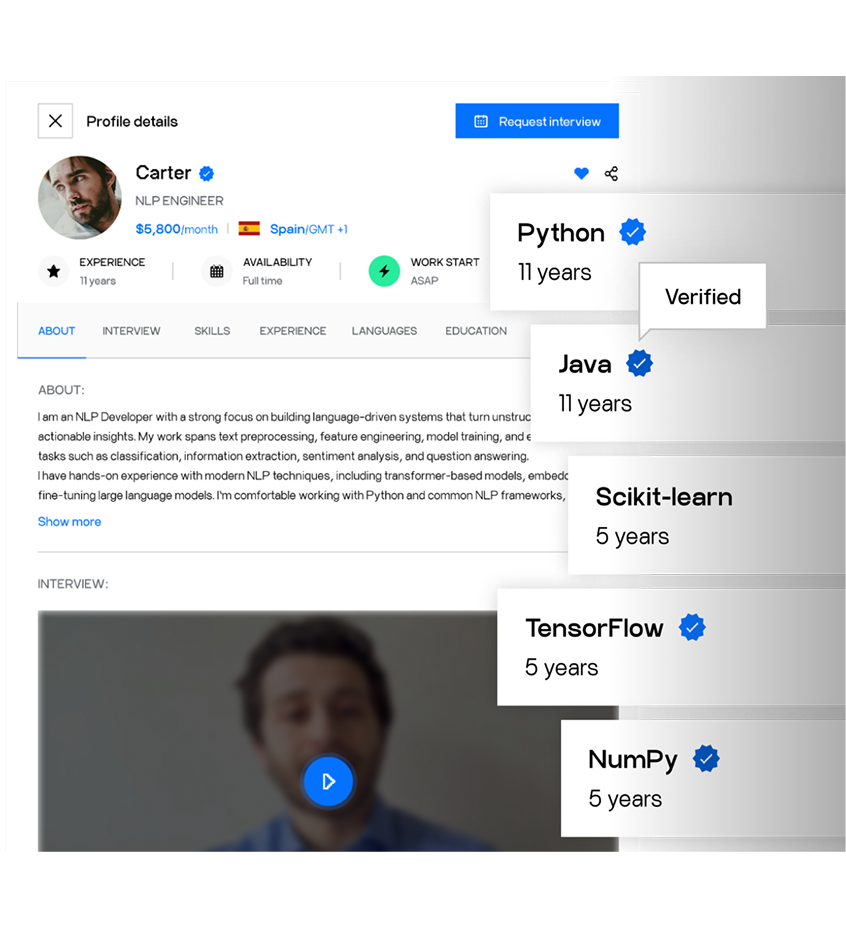
ENGINEERS WHO CAN CONTRIBUTE FROM DAY ONE
Our engineers join your workflows and start delivering immediately. No long ramp-up. No babysitting.
No slow onboarding
No productivity lag
No delivery delays after hiring
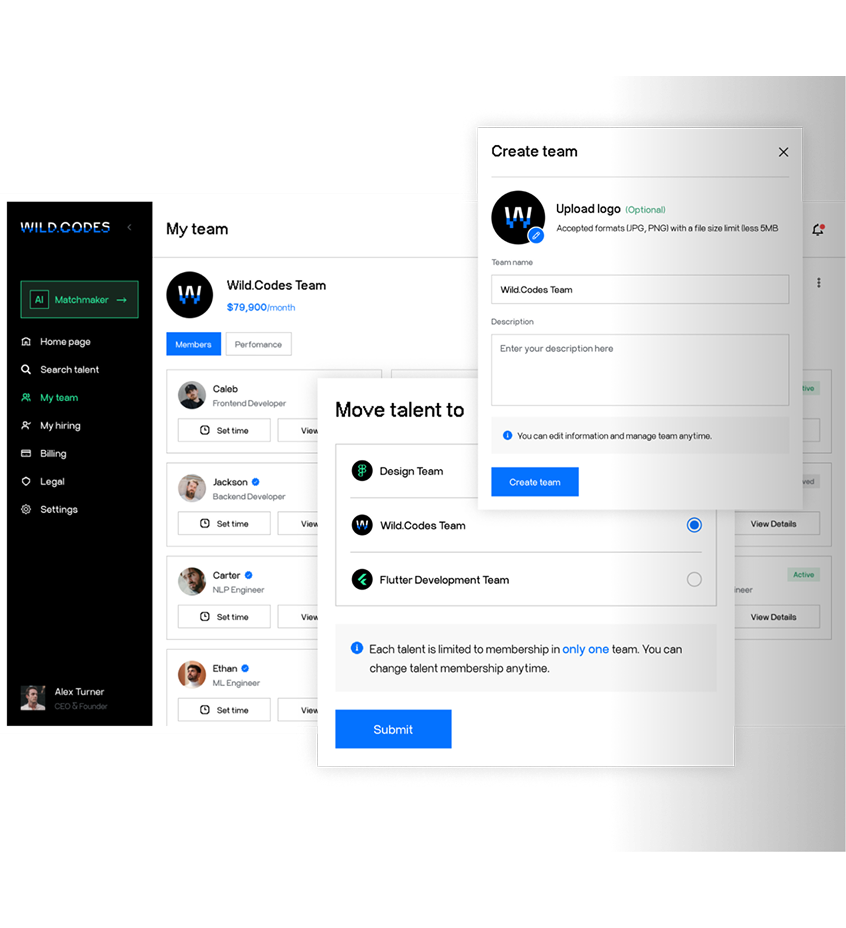
SCALE YOUR TEAM WITHOUT LONG-TERM RISK
Add engineers when needed. Replace or scale down anytime. Your team adapts to your roadmap, not the other way around.
No long-term hiring commitments
No overhiring risk
No restructuring delays
Get Started in 3 Steps

SHARE REQUIREMENTS
Tell us your stack and role.
We handle the rest.

REVIEW ENGINEERS
We send matching engineers.
You choose who fits best.

ENGINEERS JOIN
YOUR TEAM
Engineers integrate into your workflows.





CLIENT STORIES AND EXPERIENCES

As CTO, I had no time for long recruitment. Wild.Codes set up workflows and quickly connected us with top engineering talent when we needed it most.
Working with Wild.Codes saved us time and brought real quality. Fast access to skilled, reliable devs we can trust.
Wild.Codes consistently delivers top devs fast. Great skills, smooth communication, and total peace of mind.
Wild.Codes provided highly skilled developers who delivered exceptional work with precision. Their expertise, clear communication, and accurate estimates ensured success.
Why hiring a backend team
matters in 2026?

Discover more

Hire Developers
Ship faster with pre-vetted senior developers matched to your stack, roadmap, and team rhythm — without weeks of sourcing or recruiter loops.

Hire Designers
Bring in product-minded designers who can sharpen UX, clean up flows, and turn messy ideas into interfaces your users actually understand.

Hire Marketers
Add marketing talent that can turn launches, campaigns, and growth experiments into traction — not another backlog of “nice-to-have” ideas.
FAQ
1. How CTOs Scale Engineering Capacity Without Recruiting Overhead
At Seed–Series A, the CTO’s job changes fast. One quarter, you are still close to the code. The next, you are responsible for roadmap delivery, infrastructure decisions, engineering culture, security, hiring, and keeping the founder calm when the sprint slips again.
The problem is not usually a lack of ideas. It is capacity. You need senior engineers who can ship, but every traditional hiring path adds overhead before it adds output: sourcing, screening, tech interviews, compensation loops, onboarding risk, and the painful possibility of starting over when the candidate drops out.
For CTOs at growing SaaS startups, the smarter question is not “How do we recruit more?” It is: “How do we add reliable engineering capacity without turning the CTO role into a recruiting operations job?”
2. The CTO Capacity Gap Starts Before Headcount
Most engineering teams feel the gap before leadership approves a new full-time hire. Product wants faster releases. Sales needs enterprise features. Customer success is escalating bugs from bigger accounts. The founders want AI, integrations, compliance, analytics, and a cleaner onboarding flow — all at once.
Meanwhile, your core team is already carrying technical context, on-call pressure, roadmap debt, and architecture decisions. Adding another backlog column does not create capacity. It just makes the bottleneck visible.
This is where CTOs need a flexible capacity model: senior people who can join quickly, take ownership of scoped work, and reduce pressure on the core team without forcing a permanent hiring cycle every time the roadmap expands.
3. Why Traditional Tech Hiring Slows CTOs Down
Hiring senior developers through the usual channels is slow because every step competes with your actual engineering work.
You write role specs. Recruiters ask for calibration calls. Candidates need screens. Senior engineers spend hours in interviews. Strong candidates often have multiple offers. If the hire does not fit, you lose weeks — sometimes months — and your roadmap does not care that the process was “moving.”
For a CTO, this creates a hidden cost: attention fragmentation. Every hour spent reviewing weak profiles or coordinating interview panels is an hour not spent on architecture, product tradeoffs, team health, or delivery risk.
4. The Real Cost Is Recruiting Overhead, Not Just Salary
A senior engineer’s salary is only one line item. The real cost includes sourcing tools, recruiter fees, interview time, HR coordination, payroll setup, benefits, legal work, onboarding time, and management overhead.
At an early-stage SaaS company, that overhead hurts because the same people making hiring decisions are also shipping the product.
That is why many CTOs look for ways to hire vetted remote developers through a simpler model: predictable monthly cost, faster matching, and less operational drag.
5. Build vs. Buy Engineering Capacity
Some roles should be full-time internal hires. Your core architecture owners, engineering managers, and long-term technical leaders often need deep company context.
But not every capacity gap requires permanent headcount. Many CTO needs are ideal for a flexible senior engineering layer:
- shipping product features already defined by the core team;
- extending frontend, backend, mobile, QA, or DevOps capacity;
- helping clear technical debt without pausing roadmap work;
- supporting integrations, migrations, or platform improvements;
- adding specialist skill sets before the need is permanent.
The build-vs-buy decision is not about replacing your team. It is about protecting your core team from becoming the only answer to every delivery problem.
6. What CTOs Should Demand From Remote Engineering Talent
Remote talent only works if quality is high and management load is low. A CTO should not have to babysit basic engineering judgment.
The right external engineers need more than language familiarity with a framework. They need practical seniority: clean communication, ownership, code review discipline, async habits, product sense, and the ability to work inside an existing team without creating chaos.
That is why vetting matters. A marketplace profile is not enough. CTOs need evidence that a developer has been screened for technical skill, English, culture fit, and delivery maturity before the first call.
7. Speed Matters Because Roadmaps Compound
A delayed hire does not just delay one ticket. It delays every dependency attached to that work.
If your team waits six weeks to add backend capacity, the frontend plan shifts. QA compresses. Product promises get renegotiated. Founders lose confidence in timelines. Engineers feel the pressure and start cutting corners.
Fast matching changes that dynamic. Wild.Codes focuses on a 47-hour match window, helping teams move from “we need help” to “we are reviewing relevant senior developers” while the need is still fresh and the roadmap is still recoverable.
8. Pre-Vetted Senior Developers Reduce Interview Waste
CTOs do not need more candidates. They need fewer, better-fit options.
A strong shortlist should already answer the first layer of risk: Can this person code? Can they communicate? Are they senior enough to own work? Do they match the stack and project context? Are they available when we need them?
Wild.Codes gives CTOs access to pre-vetted senior developers from a 15K+ developer network, with matching designed around project fit instead of resume volume. The goal is simple: fewer unqualified screens, more relevant conversations, faster decisions.
9. Flat Monthly Pricing Makes Capacity Easier to Plan
Unpredictable hiring costs are painful when runway matters. Placement fees, markups, recruiter costs, and unclear contractor rates make finance conversations harder than they need to be.
A flat monthly fee gives CTOs and founders a cleaner planning model. You can map engineering capacity against runway, roadmap priority, and expected output without surprise recruiting invoices or percentage-based markups.
For Seed–Series A teams, that predictability is not just convenient. It helps founders scaling engineering decide when to accelerate, when to pause, and when to scale down without turning every capacity decision into a finance fire drill.
10. The Best Model Extends Your Team, Not Your Org Chart
The point of flexible engineering capacity is not to build a shadow team. It is to extend the team you already have.
That means external developers should plug into your tools, your rituals, your codebase, and your delivery standards. They should take direction from your technical leads, communicate clearly, and ship inside your existing operating system.
When done well, this model lets CTOs and engineering managers hiring vetted devs increase output without adding layers of recruiting process, HR complexity, or management sprawl.
11. When CTOs Should Use Wild.Codes
Wild.Codes is strongest when the business need is clear and speed matters.
Use it when you need to:
- hire senior remote engineers fast;
- add capacity without recruiter overhead;
- scale a SaaS engineering team through a product push;
- cover a specialist gap in frontend, backend, mobile, QA, or DevOps;
- reduce delivery pressure on a small core team;
- test an expanded team model before committing to permanent headcount.
It is especially useful for CTOs and founders who know what needs to be built, but do not want the hiring process to become the project.
12. When Full-Time Hiring Still Makes Sense
Flexible capacity is not a magic replacement for every role.
If you need someone to own long-term architecture, manage engineers, define engineering culture, or lead sensitive internal platform decisions, a full-time hire may be the better path. The same is true when the work requires heavy domain context that cannot be transferred quickly.
The smart CTO does not choose one model forever. They build a blended strategy: internal leaders for durable context, flexible senior engineers for focused execution capacity.
13. How to Add Engineers Without Breaking Team Rhythm
The best way to scale capacity is to start with a sharp scope.
Define the workstream. Name the owner. Clarify the stack, codebase context, expectations, and communication rhythm before the engineer joins.
Then keep the first milestone tight. A strong external engineer should be able to prove fit quickly through real work: a feature, integration, refactor, test suite, or infrastructure improvement that reduces pressure on the team.
14. What 160+ Teams Signal About the Model
A flexible engineering model only works if companies trust it beyond the first hire. Wild.Codes has supported 160+ teams, which matters because repeatability is the hardest part of talent delivery.
CTOs are not buying a list of names. They are buying a faster path to reliable capacity: vetted developers, a matching process, predictable cost, and the ability to scale without rebuilding recruiting from scratch each time.
For early SaaS teams, that repeatable path can be the difference between a roadmap that keeps slipping and a team that finally has enough hands to execute.
15. Final Verdict: Scale Output, Not Recruiting Load
CTOs do not win by running the busiest hiring process. They win by building teams that ship.
If your SaaS startup needs senior engineering capacity now, Wild.Codes gives you a faster route than traditional recruiting: pre-vetted developers, a 47-hour match, flat monthly pricing, and no sourcing overhead.
Keep your internal team focused on product direction, architecture, and high-leverage decisions. Let Wild.Codes help you add the engineering capacity to move faster.
CTA:Book a call to see which senior developers match your roadmap.
Table of Contents