






HERE’S WHY HIRING SLOWS YOU DOWN

You run interviews. But most candidates can’t deliver. You keep rejecting and restarting.

Your engineers are stretched thin. They cover work for missing people.

You’re supposed to ship. Instead, you’re stuck interviewing. Your product slows down.
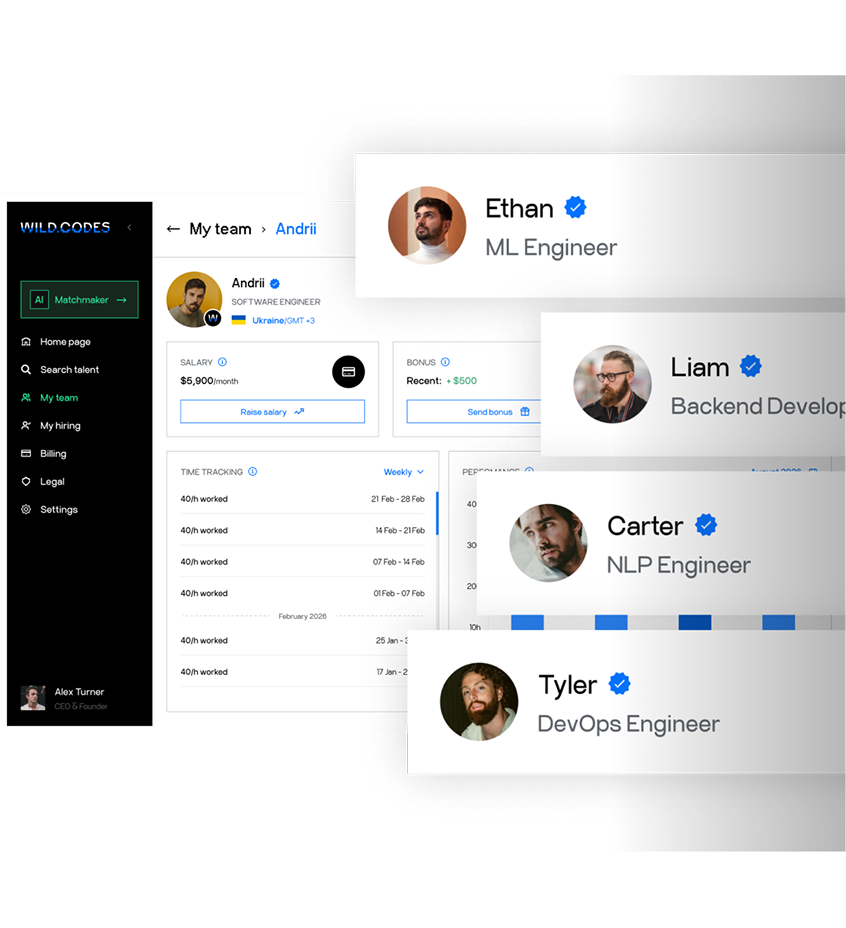
PRE-VETTED ENGINEERS ONLY
You only meet engineers who passed real technical vetting. No unqualified candidates reach your team.

No weak engineers in your team
No wasted onboarding effort
No velocity loss from bad hires
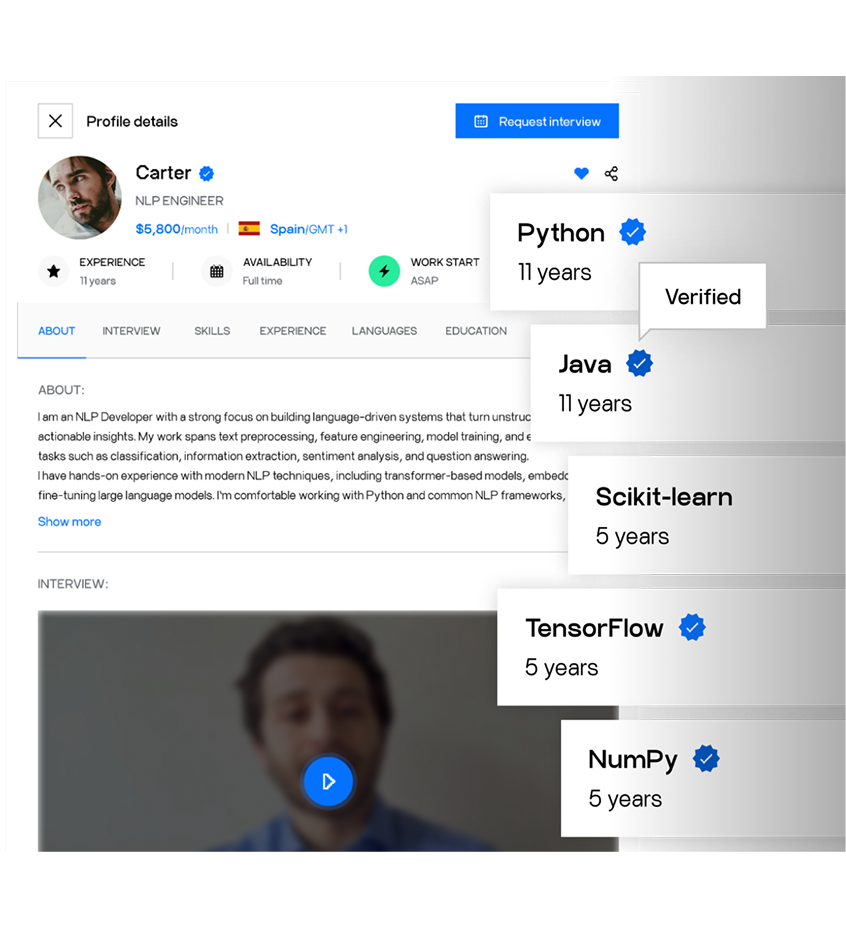
ENGINEERS READY FOR YOUR STACK AND WORKFLOW
We match engineers based on your stack, architecture, and team setup. They integrate fast and contribute without friction.
No constant hand-holding
No long ramp-up
No integration friction
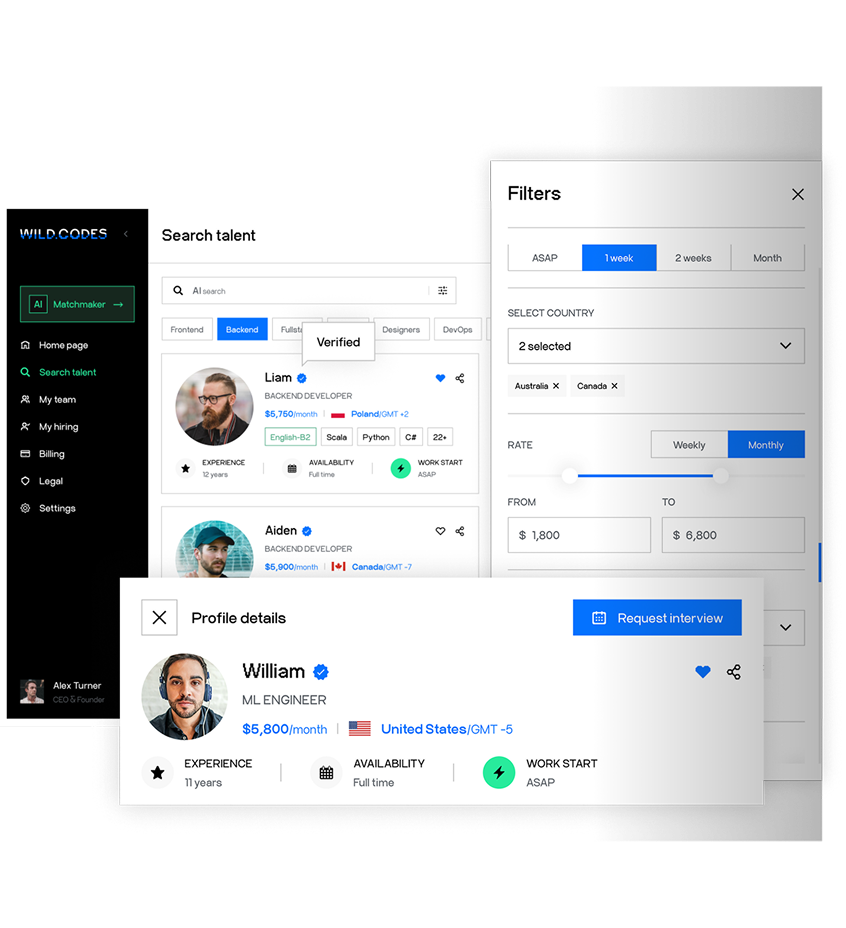
YOUR NEXT ENGINEER IN 47 HOURS
Get engineers ready to join when your team needs support. Close gaps before they slow delivery.
No overloaded team
No delivery bottlenecks
No waiting months to hire
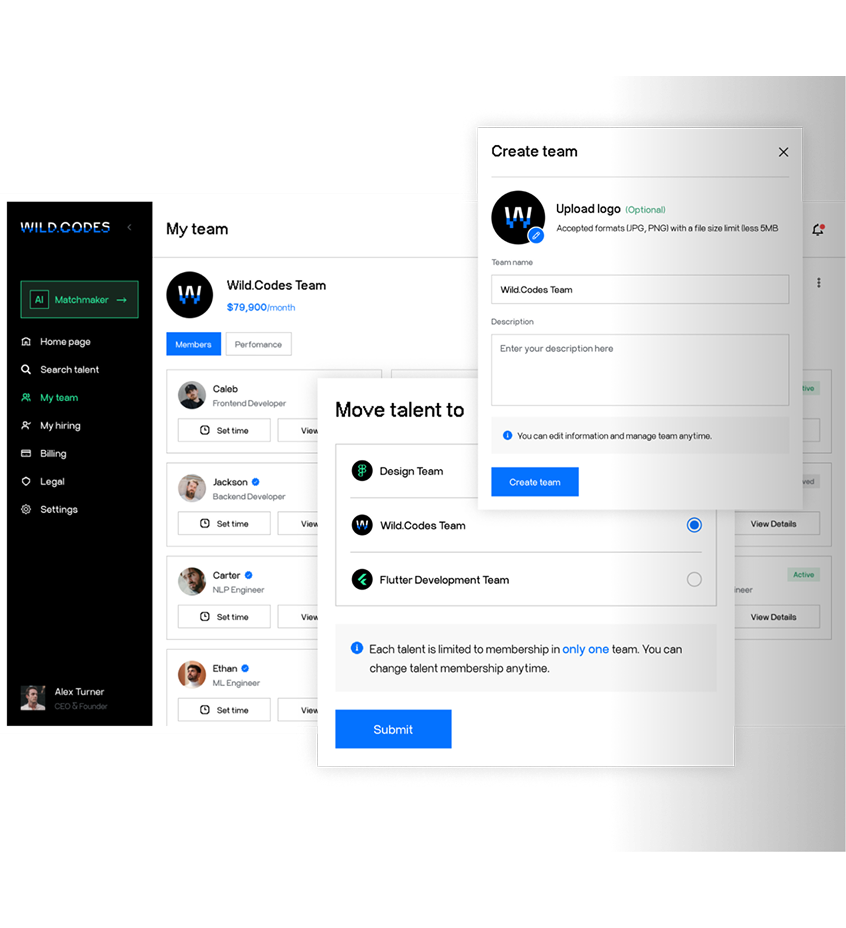
SCALE YOUR TEAM WITHOUT DISRUPTING DELIVERY
Add engineers when workload increases. Scale down or replace when priorities change.
No overloading your core team
No delivery disruption
No long-term hiring constraints
Get Started in 3 Steps
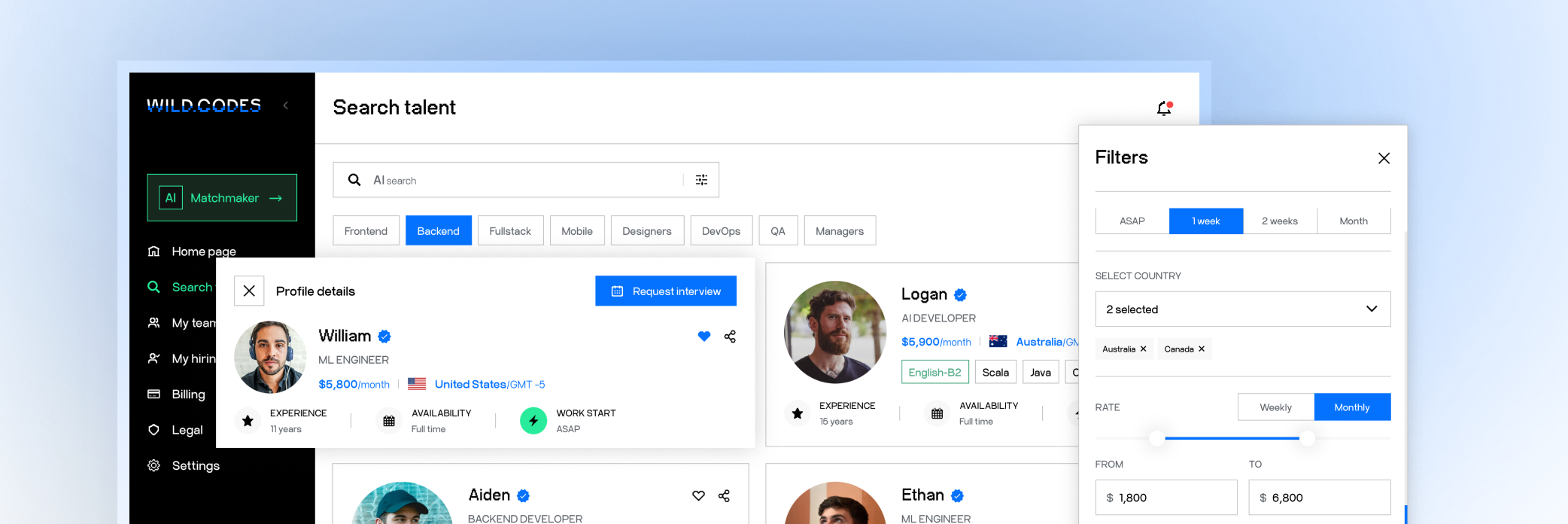

SHARE REQUIREMENTS
Tell us your stack and role. We handle the rest.

REVIEW ENGINEERS
We send matching engineers.
You choose who fits best.

ENGINEERS JOIN
YOUR TEAM
Engineers integrate into your workflows.





CLIENT STORIES AND EXPERIENCES

Wild.Codes consistently delivers top devs fast. Great skills, smooth communication, and total peace of mind.

An amazing collaboration! You helped us find talented co-workers who brought stability, diversity, and leadership when we needed it most.
Wild.Codes connected us with top engineering talent, delivering on time and within budget — truly setting the standard for a great partnership.
Wild.Codes provided highly skilled developers who delivered exceptional work with precision. Their expertise, clear communication, and accurate estimates ensured success.
STOP OVERLOADING YOUR TEAM

Discover more

Hire Developers
Ship faster with pre-vetted senior developers matched to your stack, roadmap, and team rhythm — without weeks of sourcing or recruiter loops.

Hire Designers
Bring in product-minded designers who can sharpen UX, clean up flows, and turn messy ideas into interfaces your users actually understand.

Hire Marketers
Add marketing talent that can turn launches, campaigns, and growth experiments into traction — not another backlog of “nice-to-have” ideas.
FAQ
How Engineering Managers Protect Team Velocity While Scaling
Engineering Managers are not usually hired to run recruiting pipelines. They are hired to protect delivery.
Shipping features. Maintaining systems. Keeping engineers focused. Reducing blockers. Making sure the team can move without turning every sprint into a rescue mission.
But hiring still lands on the EM’s desk.
Not always officially. Sometimes it arrives as “just review these profiles.” Sometimes it becomes five interviews in a week. Sometimes it shows up as a missing backend engineer, a delayed release, and a team quietly absorbing work that should have been handled by someone else.
That is the real problem: hiring does not stay outside the team. When capacity is missing, the team pays first. Work gets redistributed. Senior engineers context-switch. Delivery estimates stop meaning anything. The roadmap slows because the team is carrying more than it was designed to carry.
Scaling an engineering team is not just about adding headcount. It is about adding the right engineers without breaking the operating rhythm that already works: less CV noise, less interview drag, less onboarding debt, and more people who can contribute before the team burns another sprint covering the gap.
That is where Wild.Codes fits: we help teams add pre-vetted engineers quickly, so EMs can protect velocity instead of becoming the bottleneck between hiring and delivery.
The Team Feels the Impact Before Anyone Else
Leadership usually notices hiring problems late.
The dashboard shows missed milestones. The roadmap starts slipping. Stakeholders ask why the release moved again. By then, the team has felt the pressure for weeks.
EMs see the earlier signals.
A senior engineer is pulled into too many reviews. A tech lead starts owning details they should be delegating. Tickets move, but not cleanly. The same people keep covering the same gaps. On paper, the sprint is “in progress.” In reality, the team is running on borrowed capacity.
Understaffing rarely looks dramatic at first. It looks like small compromises: skipping the refactor, asking the same senior engineer to “just take one more,” stabilizing after launch, treating every gap as urgent. Those compromises stack.
A missing engineer becomes slower reviews. Slower reviews become bigger queues. Bigger queues become late feedback. Late feedback becomes rework. Then the team starts calling it a process problem when the real issue is capacity.
This is why EMs care so much about hiring speed, even if hiring is not their core job. They are trying to stop delivery pressure from spreading through the team.
Good teams can absorb short bursts of pressure. They cannot absorb permanent shortage without losing quality, predictability, morale, or all three.
The dangerous part is that strong engineers often hide the damage for too long. They compensate, work around gaps, and keep shipping until the cost becomes personal: burnout, disengagement, or a quiet search for a calmer team.
Protecting velocity means catching that pattern before it becomes the culture.
Hiring Creates Risk Inside the Team
Hiring is supposed to reduce delivery risk. Bad hiring does the opposite.
Every weak candidate that reaches the team creates work. Someone has to review the profile. Someone has to join the interview. Someone has to ask technical questions, evaluate answers, compare notes, and explain why the candidate is not strong enough.
Then the cycle restarts.
For an Engineering Manager, this is not just calendar pain. It is team risk.
The people best qualified to evaluate candidates are usually the same people carrying architecture, the hardest tickets, and the highest-context decisions. Pull them into too many interviews and the team loses focus where it matters most.
That creates a strange tradeoff: either the team under-invests in hiring quality and risks a bad fit, or it over-invests senior engineering time and slows down delivery before anyone even joins.
Neither option is healthy.
A weak hiring process also creates confidence problems. If the team sees too many low-signal candidates, every new profile becomes a burden and every interview feels like a tax. Eventually, “we need help” turns into “please don’t send us more people to evaluate.”
That is when hiring competes with delivery directly. A recruiter can fill a pipeline with profiles. That does not mean the team gets useful signal. The expensive part is determining whether a candidate can actually work inside the team’s technical reality.
Can they handle the stack? Can they reason through tradeoffs? Can they communicate in code review? Can they join an existing workflow without needing constant hand-holding? Can they contribute without creating hidden cleanup work later?
Those are not resume questions. They are execution questions.
Wild.Codes is built around that difference. Instead of asking Engineering Managers to screen volume, we narrow the field before candidates reach the team. The goal is not to send more profiles. The goal is to send fewer, stronger matches — engineers who passed technical vetting and make the team’s review time worth it.
If the team needs backend capacity, start from a relevant talent pool like backend developers, not a generic spreadsheet. If the issue is delivery ownership across a whole squad, look at team-based support instead of asking the same core engineers to stretch again. The point is the same: hiring should reduce pressure, not create another operational drag.
The Hidden Cost of Weak Hiring Signal
Weak hiring signal is expensive because it looks cheap at the start.
A candidate seems fine. The CV has the right words. The interview is okay. The team is overloaded, so everyone wants the answer to be yes. The person joins.
Then reality shows up.
They need more context than expected. Their pull requests require heavy review. They miss architectural details. They move slowly in the actual codebase. They are not terrible, but they are not independent either. Instead of increasing capacity, they consume it.
That is the hidden cost: a weak hire does not simply fail alone. They pull energy from the rest of the team.
Senior engineers start correcting work that should have been solid. The EM spends more time checking progress. Delivery plans become harder to trust because output varies. The team becomes cautious about delegation. Everyone gets a little slower.
This is why “we can train them” is not always the generous answer. Training is valuable when the team has room. It is dangerous when the team is already stretched. If the hire was meant to relieve pressure, but needs months of support before contributing, the timing is wrong.
EMs are not looking for mythical rockstars. They are looking for reliable contributors who can fit the team’s standard of work. That requires better signal before the team spends time.
Strong signal comes from practical vetting: technical ability, stack fit, communication quality, ownership habits, and enough context to predict whether the engineer can work in that environment.
It also comes from matching against the team, not just the role title. “React developer” is too broad. “React developer who can work inside a fast-moving SaaS product with shared ownership, async communication, and limited onboarding bandwidth” is closer to the truth. The more specific the signal, the less the team has to discover through pain.
This matters even more when the team is scaling. One weak hire is manageable. Several weak additions can change the team’s center of gravity. Review standards slip. Delivery slows. Strong engineers become de facto babysitters. The EM ends up managing around people instead of building through them.
Scaling should make the team stronger. Weak signal makes it heavier.
What Changes When Engineers Join Without Slowing the Team Down
The best hiring outcome for an Engineering Manager is not “we filled the role.”
It is “the team got faster without losing control.”
That happens when new engineers join with enough fit to reduce pressure quickly. They understand the stack, work inside existing tools, ask useful questions, and take tickets without creating review chaos.
When that happens, the impact is visible fast.
Senior engineers get focus back. Reviews become less clogged. The EM can plan with more confidence. Delivery pressure stops concentrating on the same few people. Work becomes easier to distribute. The team has room to fix quality problems before they become production problems.
Most importantly, scaling stops feeling like a disruption.
That is the standard EMs should expect: not a pile of candidates, not a longer funnel, but a practical path from capacity gap to contribution.
For CTOs and tech leaders, that same problem often shows up as roadmap risk — which is why the CTO solutions page frames hiring as a bottleneck to remove. For founders, it often shows up as lost momentum — covered on the Founders solutions page. For Engineering Managers, the pain is closer to the team: velocity, focus, morale, and the daily cost of carrying missing capacity.
The fix is not to make managers better recruiters. The fix is to stop forcing engineering teams to absorb low-signal hiring work.
Wild.Codes helps by sending engineers who are already filtered for technical ability and practical fit. You share the stack, seniority, and what “good” looks like. We handle sourcing and vetting. Your team reviews a focused shortlist and chooses who fits best.
No CV spam. No endless screening. No months of waiting while the team gets stretched thinner.
Just engineers who join the workflow, support delivery, and help the team move again.
If your team is already carrying too much, do not wait until velocity drops far enough for everyone else to notice. Book a call and add capacity before the pressure becomes the system.
Table of Contents